
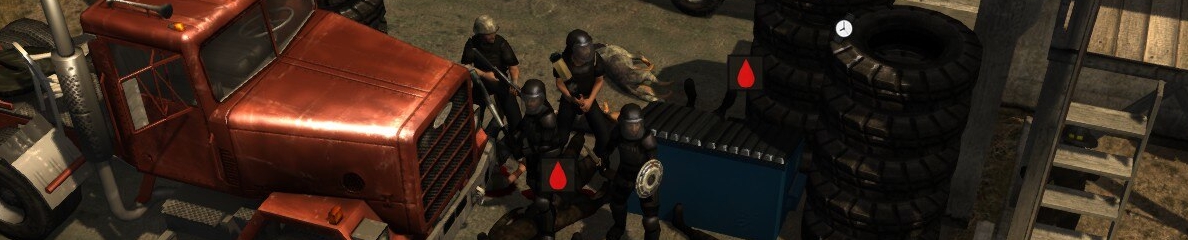
Welcome to AtomTeam’s third RPG: Swordhaven: Iron Conspiracy. If you have played any of their former projects, like ATOM RPG: Post-apocalyptic indie game, or ATOM RPG Trudograd, you know what to expect here. It’s essentially the same type of roleplaying experience—created in the same engine, following the established structure, and gameplay mechanics they created. However, this time they are ditching the radiated wasteland for a lush low-fantasy medieval world, where the sword rules instead of the rifle.
Barbarian lands
Destiny has brought you by ship to Nova Drakonia, the untamed barbarian lands at the frontier of the Empire. Things start rather rough, as a newly made friend on the voyage entrusts you with a mysterious necklace before succumbing to his wounds. His last dying wish is for you to deliver this medallion to someone of significance in the capital of Swordhaven—with the emphasis that time is of importance, as the fate of the Empire hangs on it reaching his hands.
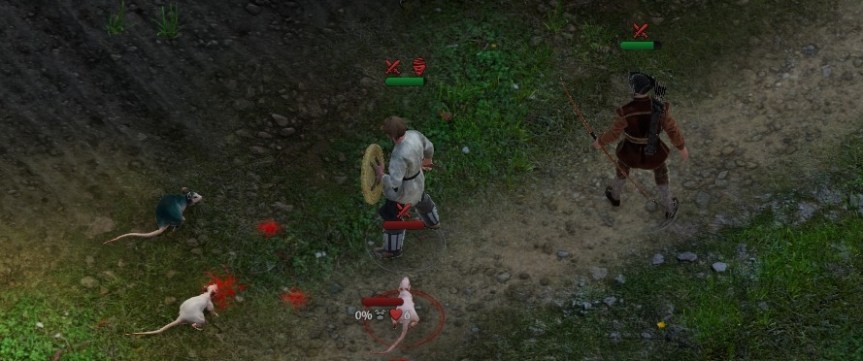
That’s essentially the main quest that will remain as vague as described for the majority of the time playing. As you might have noticed, there is a mention of a conspiracy in the title of the game. While you get tidbits of the factions involved in this conspiracy (aka the main quest), this segment will not move forward until you choose to continue it—many hours and levels later. This means that an incredibly large part of Swordhaven will be low-level adventuring, which in its simplest terms can be described as “welcome to side-quest city”.
Now, while enjoyable, as the writing is excellent, and going from zero to hero is a fun journey, I can’t help but feel it comes off as meandering after a while sadly. The only reason you are here is to enrich yourself, with no real dangers or a mystery pushing you forward. You can even give away the medallion in the beginning of the game, which makes it even worse pacing-wise—as of now, you don’t even have an item to remind you that yes, the game does indeed have a plot. What is funny here is that the main quest does have a storyline that ties it all together, so there is a mystery that hangs over the setting waiting to get solved by you. However, since it’s not something that’s ever brought up by being sprinkled throughout the adventure, the conspiracy and its reveal comes in the final section of the game—making it feel more like a whisper than a revelation.
Could have been better
Talk about wasted potential, seeing as the build-up towards this is almost nil. For a game having conspiracy in its name, I was expecting my player character to be part of it—more than the final few hours, that on top of things, felt very linear, and unfortunately unpolished. Many of the individual quests up to that point were good, as the writing and world-building outside the main plotline were intriguing. It’s just a shame that the leading storyline wasn’t written into this part, but then again…
Heavy end-game spoilers incoming! Skip to the next part if you don’t want to get spoiled.
Start-spoilers
You see, even if it was interwoven into the campaign, I’m not sure if I had liked it much. It would have been better for sure, but as it is, I feel that the big conspiracy and reveal undermines the whole premise of Swordhaven. The premise was a low-fantasy world, and while it contains fantastical elements, it was fairly grounded, which is unique by itself. But then, here comes the ending. The conspiracy involves a bunch of wizards, running the world through some kind of Illuminati inspired cabal—so far so good. The magic these wizards use is not exactly magic, though, it’s just high-tech equipment from another dimension. Oh boy!
These “wizards” are from another world, coming to Nova Drakonia to harvest a rare ore to use for their spaceships. My mind was just not ready for this. While I applaud the devs for creativity, now after a day’s contemplation—this story twist just didn’t work for me. It destroyed my immersion and investment into this world, and if the narration wasn’t distracting enough, the jump from crossbows to plasma rifles sealed the deal.
On a side-note, I wonder if the inspiration for the story comes from the film (& novel) Hard to be a God, as it shares some minor themes—like having a non-intervention law to protect lower civilizations from being influenced by time-travelers / dimension-hoppers.
End-spoilers
Hacking and shooting
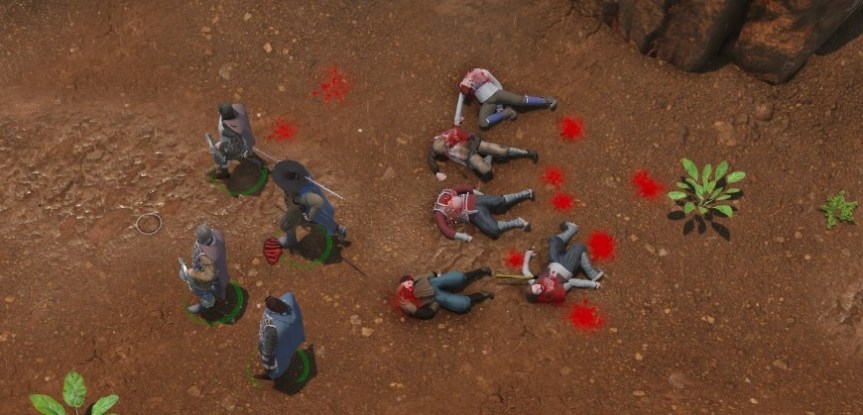
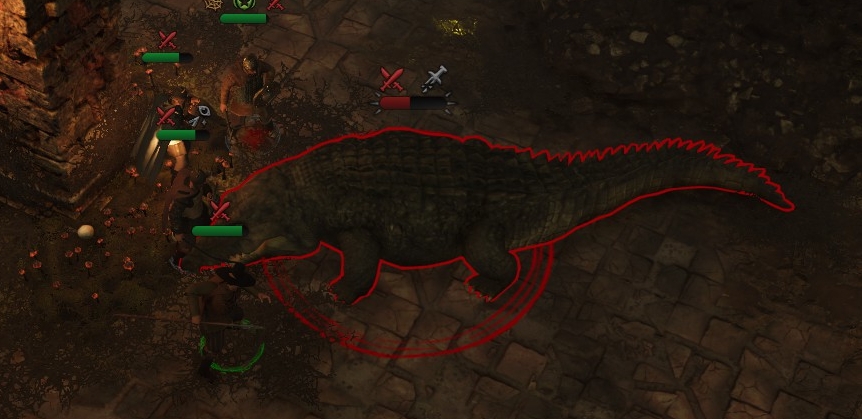
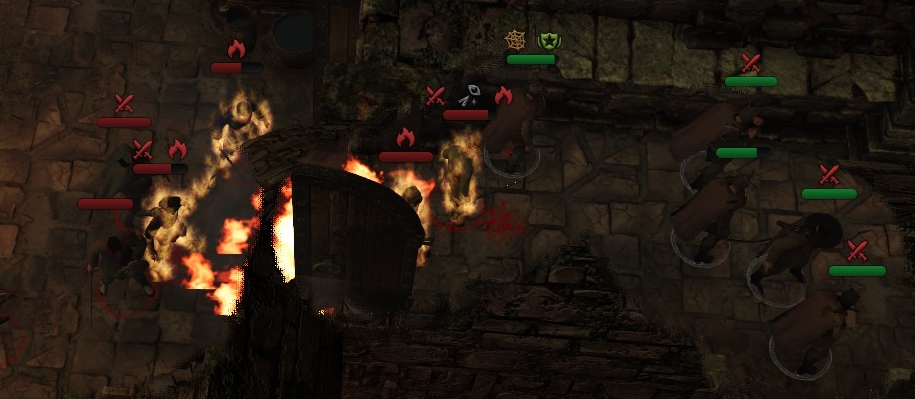
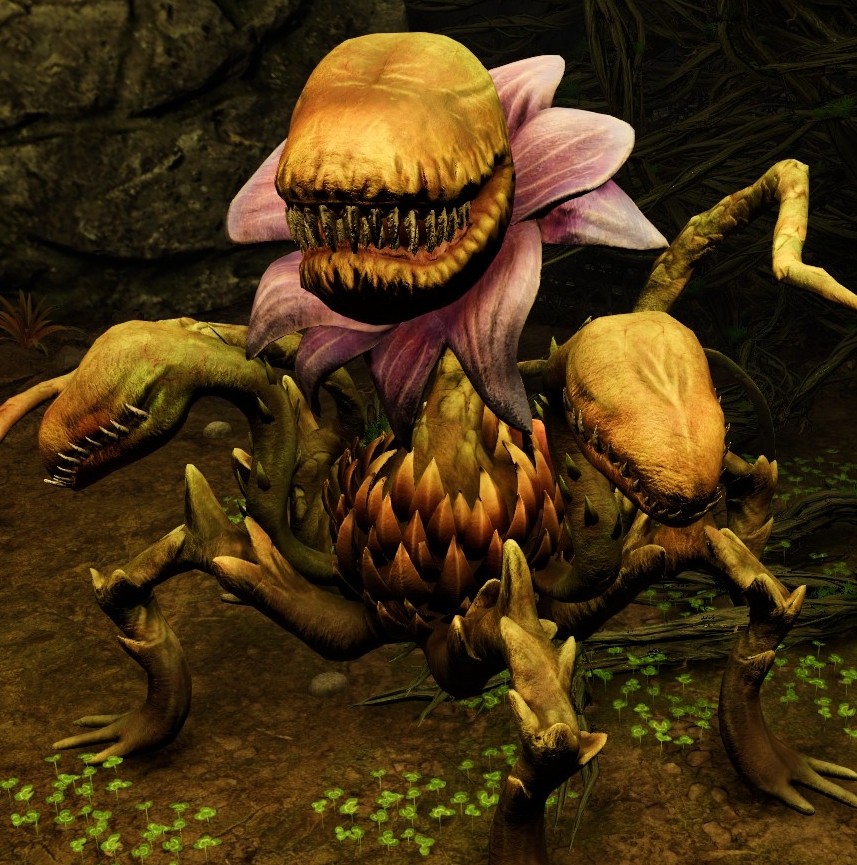
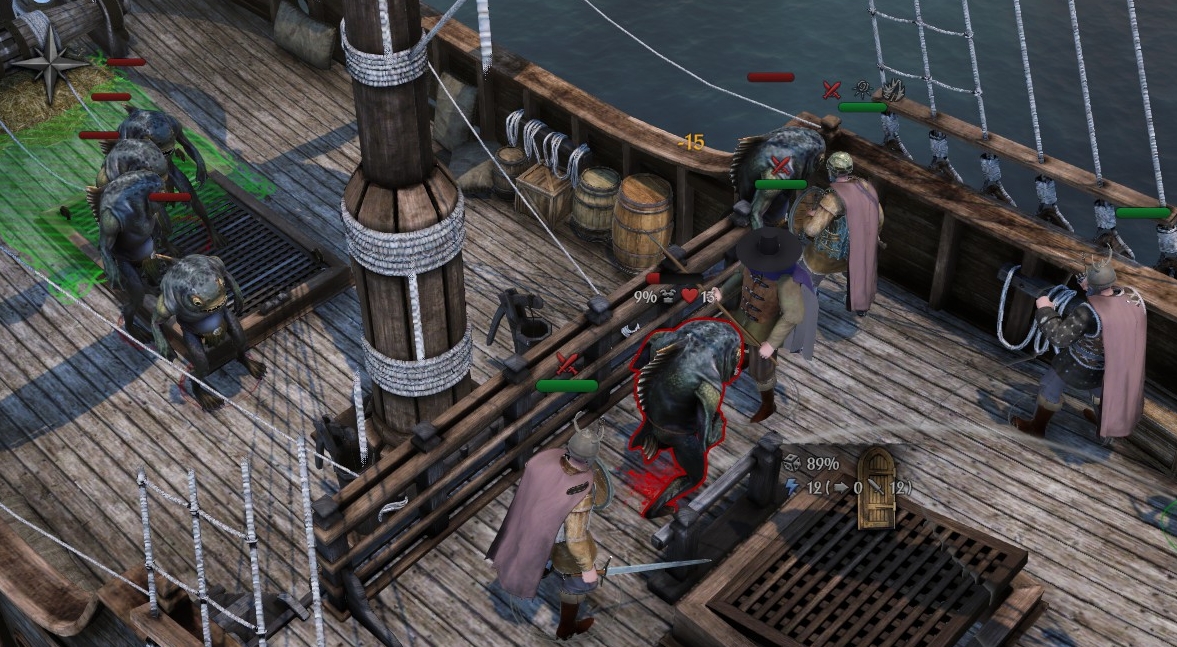
Like their former games, the gameplay of Swordhaven works very much the same way, with one difference: the option of real-time fighting. I did try out real-time a little and while it functioned as advertised, it felt a lot less elegant than their well-established turn-based system. It’s faster, no doubt, but a hell of a lot messier, in my opinion. I quickly dropped real-time for glorious turn-based combat where you get to control every blow and deflection. Overall, the combat felt fair and fun, but compared to ATOM RPG, it did become pretty easy after a while. There are also a lot more creatures to battle, as ATOM RPG could have large segments of quiet stretches with nothing to sate the blood god.
When you level up, there are plenty of perks to pick from—all with quirks, and advantages. What I found out though, after heavy use in combat, is that the crossbow and the unarmed (knuckle dusters) weapon category, with invested perks, absolutely dominates in damage output and utility. It’s possible that I built my axe, spear, and sword-guys terribly wrong, but the lady with the crossbow did consistent very high single-target damage from the get-go. And my hand-to-hand combat dude, thanks to his ability to knock down people and being able to throw a flurry of punches, could either incapacitate enemies, or just outright delete them from turn-one. None of the other party members (five being max) unlocked something as useful as that.
The non-combat skills
Fortunately, there is more to the game than battle. There are skills affecting dialogue, haggling, crafting and sneaking and stealing. Most of these skills are shared among the party, but anything regarding personality is only for the player created character. This means there is no investing in for example “persuasion” for other party members, so it’s either your character will charm the pants of people, or nobody will. However, pick-pocketing and lock-picking, anyone can learn, which I highly recommend at least one party member fully embrace. It helps with dungeon loot, and getting important quest items out of the pockets of unsuspecting victims when the diplomatic approach fails.
The actual roleplaying is in general pretty good, as there are many skill-checks throughout the game that helps you establish your character in the world. Some choices (often in dialogue) come with consequences, like being locked out from further conversation options, or turning a friendly talk into a skirmish. So, you will have to be careful, but if you genuinely roleplay as a somewhat smug asshole, for example, and pick your choices after that instead of metagame the system for the best possible outcome—there are a lot of results to provide a fun “dynamic” RP experience.
Medieval fantasy charm
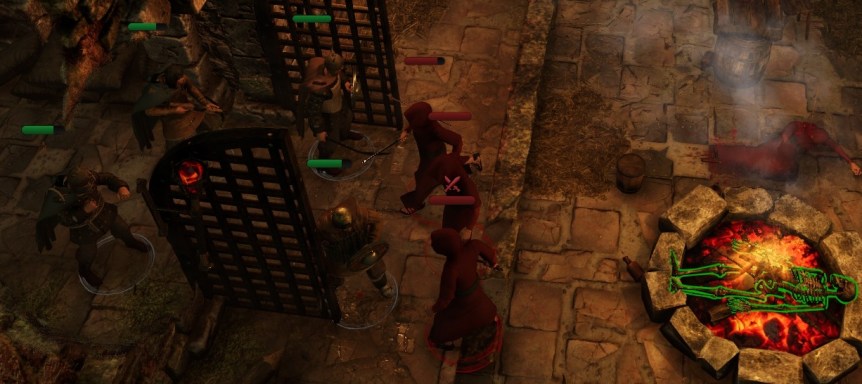
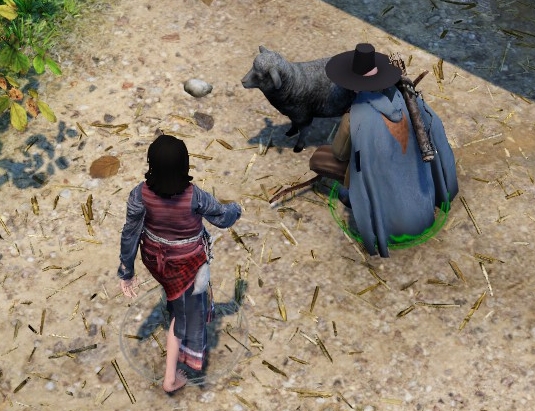
Being part of the same engine as ATOM RPG, Swordhaven looks and acts in part—on a technical level at least. It’s still viewed from above, like their former games, and the classics it takes inspiration from, with the main difference being the art and setting. While the engine is showing its age now, it still looks good, and brings a certain grounded east-slavic charm to the experience. It’s just very pleasant looking, which helped me get immersed into the game. The music and the sparse voice-acting have the same appeal as the graphics. All in all, Swordhaven has a really nice presentation to it that for the most part provides a warm and nostalgic low-fantasy snuggle blanket.
Conclusion
Swordhaven is a good low-fantasy RPG that unfortunately falls short due to its weird but ambitious end and main plotline. While the journey to that point felt fun and cozy—it comes off as aimless at times, thanks to the endgame being segmented into its own chapter of the game. I still recommend Swordhaven to those that want a solid classic RPG experience, but regrettably, the ending is structured in such a way that no sequels will be possible with the same premise. Make sure to keep that in mind going in! It’s just not an ending for your character—it throws the lore on its head, which makes a continuation of the low-fantasy theme an impossibility.
Addendum:
Before we finish this review. Here is another viewpoint from user vazha of RPG Codex. He considers Swordhaven worth at least a four on the rating scale, with the game deserving to be a future classic. Click this text to read!
Low-level, low-magic storyfag heaven. While you rightly praise the atmosphere and writing, more should be said about it and the setting itself deserves special mention. Without inventing anything new, it feels organic, salt-of-the-earth, and genuinely enjoyable to explore and learn about. It’s a delicious cocktail made of ATOM, Age of Decadence and I think I detected a tinge of the Inquisitor as well, wouldnt be surprised to find out the developers have played it. In short, they promised a low-level, low-magic adventure and boy, did they deliver. I honestly can’t recall another game & studio in the last decade that pulled this off so convincingly. Will have my vote for the game of the year.
Contrary to what you said, the fact that the game doesn’t shackle you with the usual “impending evil, time is of the essence, parasite in your brain / chosen one / amnesia” nonsense felt incredibly liberating for me. There was a world to live in and so I did – I played and played and played as if it were a perfect sandbox, and had an absolute blast doing so.
Likewise, this is the first game in the last decade (or two?) that gets the economy right. Resources matter for most of the game. Money is tight; you won’t be swimming in gold, and you’re forced to spend carefully. The option to refuse quest rewards in exchange for extra xp is a neat touch, and something that wouldn’t work in games with looser economies.
Another thing not discussed enough in the review, something that used to be sacred here at the ’Dex, is choices and consequences, done right. The choices (and sometimes sacrifices) you make are meaningful rather than cosmetic or superficial, as in so many other games for the last decade or so. Quests can be completed in a wide variety of ways, and none of them feel contrived.
Re: builds. Most builds are perfectly viable, since combat becomes easier as you gain more party members. That said, some weapons are clearly stronger than others, something I expect will be evened out in patch 1.1. Crossbows and unarmed builds are indeed strong, but bows reign supreme. As things stand, bow main is the most optimal way to play: due to low stamina cost, you can safely dump Strength and Endurance, remain a one-shot machine, and still reliably pass most Intellect / Attention / Personality checks because you can afford to raise each of them to 8 or even higher. Honourable mentions: blunt weapons – Mace is an unparalleled crowd-control machine, and the maul is extremely satisfying: hits hard, offers crowd control and AoE, and caps it all by providing a decent damage resistance. Spears and halberds, on the other hand, I found to be the trap option and hard to optimize for without making unwarranted sacrifices.
Now for my own criticisms, or rather, suggestions, some of which may be addressed in patch 1.1, though for others it may already be too late. Overall, this game firmly sits in flawed gem territory. Could well become a cult classic in time, but it probably needed another year – or at least half – in the oven. Nothing thats rough about it feels unfixable, which makes the fact that they released it too early all the more frustrating.
Character creation. The overall system design is solid, but there are some questionable, or rather, Pillars of Eternity-esque, choices. You can dump Strength and still have a perfectly viable two-handed user in the heaviest armour. You can dump Dexterity and rarely feel the impact on combat accuracy. Overall, attribute balance (not in the Sawyer sense) needs fine-tuning; right now it’s too lax to feel rewarding, even for optimal builds. A capstone bonus for pushing a stat all the way to 10 would also help as currently there’s little reason to do so.
Companions. They’re decent, but somewhat underwhelming for a storyfag RPG? Could definitely use more polish, and by that I don’t mean romance nonsense or personal trauma dumping. Just more agency, more interactivity. Atom RPG did this slightly better, I think. The decision to tie companions to your background also feels flimsy. Why can’t a Weidelott team up with a travelling scholar? Or strike up an unlikely friendship with a bandit lass in the hope of saving her soul, or damning your own in the process? To make these choices more meaningful, access to certain background-locked quests could be tied to companions instead. For example: the one-eyed bandit lass could grant access to the Night Army or the golden egg-laying chicken questline even if you have a different background; the knight could initiate dialogue with the old cooper on your behalf to unlock the knight quest. The fact that all companions join at level 3, rather than the level you encounter them at, also feels counter-intuitive and prompts you to rush to Swordhaven as early as possible.
Party size and combat. Brace yourself for a hot take: the party limit is too large. More people directly translates into trivialised combat. Running with three characters (MC plus two companions) would have provided a fairer challenge. Some companions could also have been mutually exclusive, as in the classics. At least, gate the later ones behind levels, I guess? The biggest offender here is the final companion: an optimised bow user that completely negates any remaining challenge and her voice acting is just so fucking awful I ended up firing her altogether. La di da, my ass.
It’s probably too late for a full combat overhaul, and the system is decent enough not to demand one, but a tougher challenge / difficulty setting would be at the top of my wish list for patch 1.1. Right now it’s simply too easy. Toughen the enemies up, at least give them more archers, for god’s sake. I have no idea how moddable is the game, perhaps the modders can do it?
Crafting and itemization. Once again, the overlying system is solid, but it badly needs more unique gear. I’m not talking about overpowered stuff that does magic damage, just more named weapons and armour that do something different, even if that comes with drawbacks. There are some in the game, but far too few.
And finally, on the Age of Decdence twist. Not a fan. I hated it in Age of Decdence and was disappointed to see it here as well, though I’m sure some people enjoy it. A matter of taste.
Thanks for reading, and thanks to vazha for providing valuable feedback and counterpoints.
– Thomas
PS. Make sure to the check the interview I did with Aleksandrs Cernavskis, the writer and combat designer for AtomTeam, if you curious about the devs, and what inspired them to make Swordhaven.
| System: | PC (Steam) |
| Played with: | Mouse & Keyboard |
| Release year: | 2025 |
| Mods/fixes: | None |
| Enjoyment rating: |  |


Feeling generous?

 Tom's Gaming Vault