

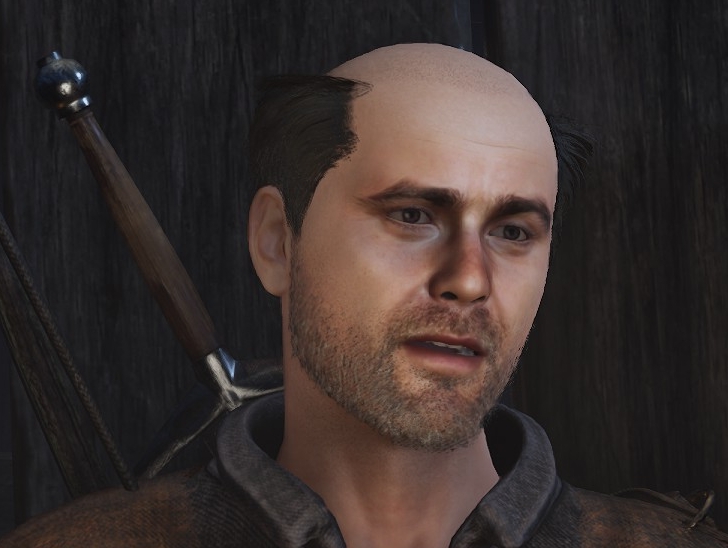
I’m far from finishing Of Ash and Steel, so this is not a review—just a critique of the game and its mechanics after about fifteen hours of playing. While I think it’s a good addition to the specific Gothic/Risen/Skyrim lineage of RPGs, I do find it falls short in places—in areas where they could have found easy inspiration. It’s not something that overly disappoints me, but thanks to these issues it will probably never reach the same level of appreciation (at least from me).
1. Cartographer Premise
The developers went in fully on not having any kind of quest-objectives, nor a map to show where you are in the world. While this is fine and should be applauded, it’s also a massive missed opportunity considering who you are playing as—a maker of maps. The world is huge, occasionally feeling like a labyrinth to navigate thanks to having very little open spaces. So, why not let the player at least create his or her own map by exploring, while letting the player set down marks for places of interest.
As it is now, you have to keep everything in your mind, unless you actually scribble down your own map in real-life on a notepad—but who does that nowadays? Especially when the tech is there, and with the narration providing an excellent reason for having an in-game feature of a dynamically created map. From what I have read, you will be able to buy a map in Chapter Two, but I don’t know of its function yet. Either way, forming your own map in Chapter One would have been a great addition to the exploration and general pacing.

2. NPCs & City Design
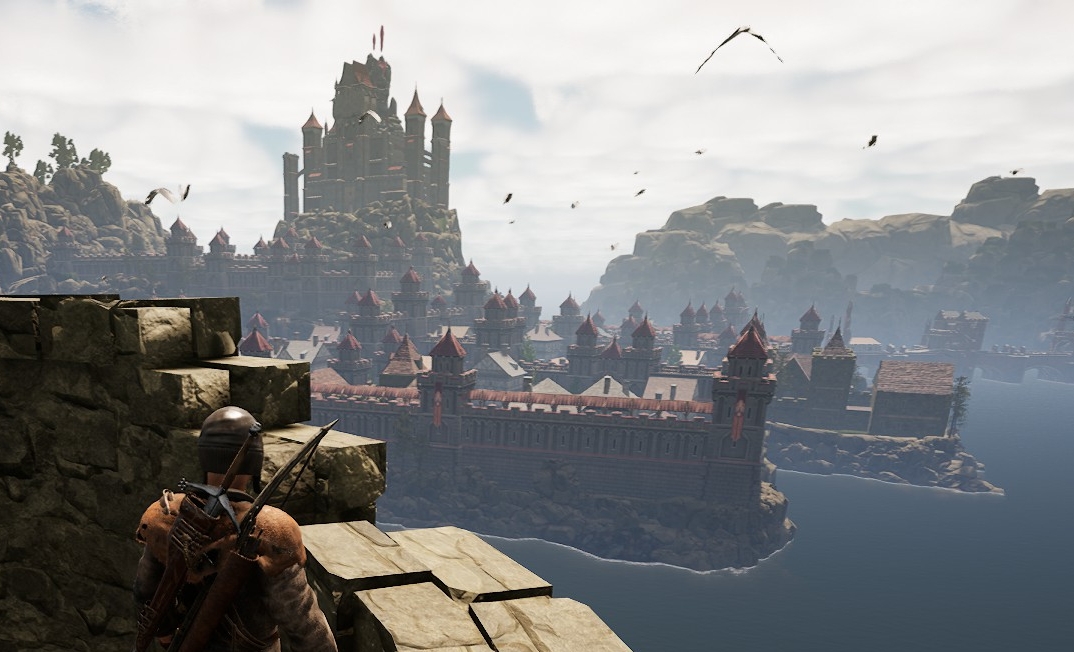
The main city in Of Ash and Steel is huge and sprawling, but thanks to its size, it breaks one of the fundamental rules of a Gothic-like—and that is by making the majority of its inhabitants static lifeless NPCs without a schedule (think Dragon Age: Origins). It’s jarring, seeing as NPCs otherwise obey the genre rules outside the city gates.
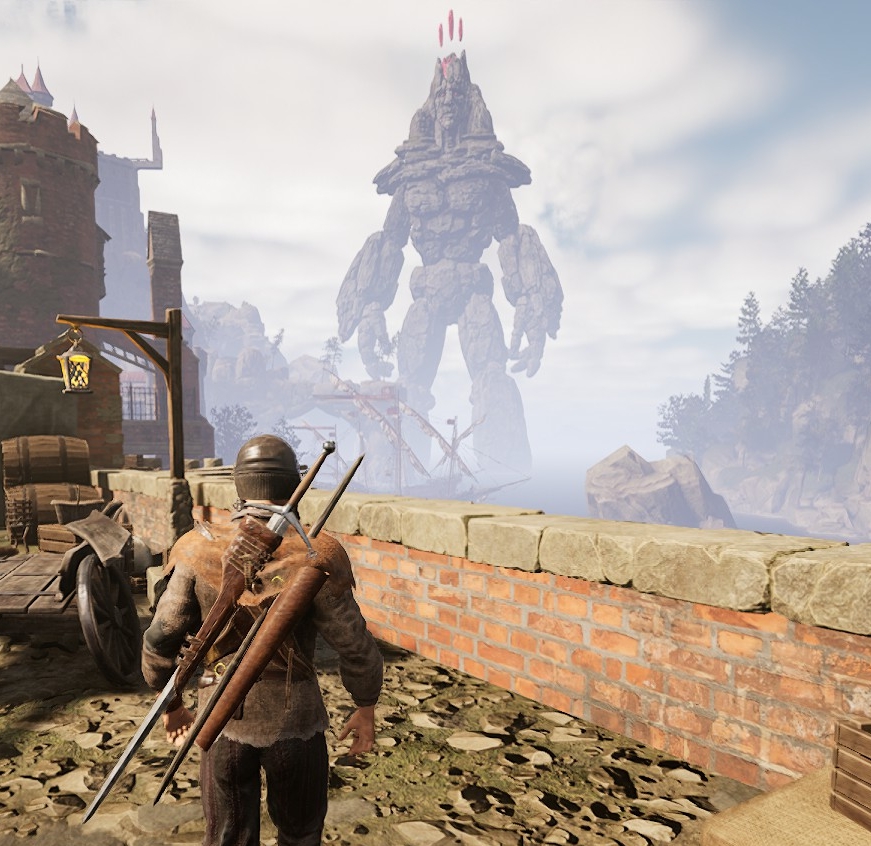
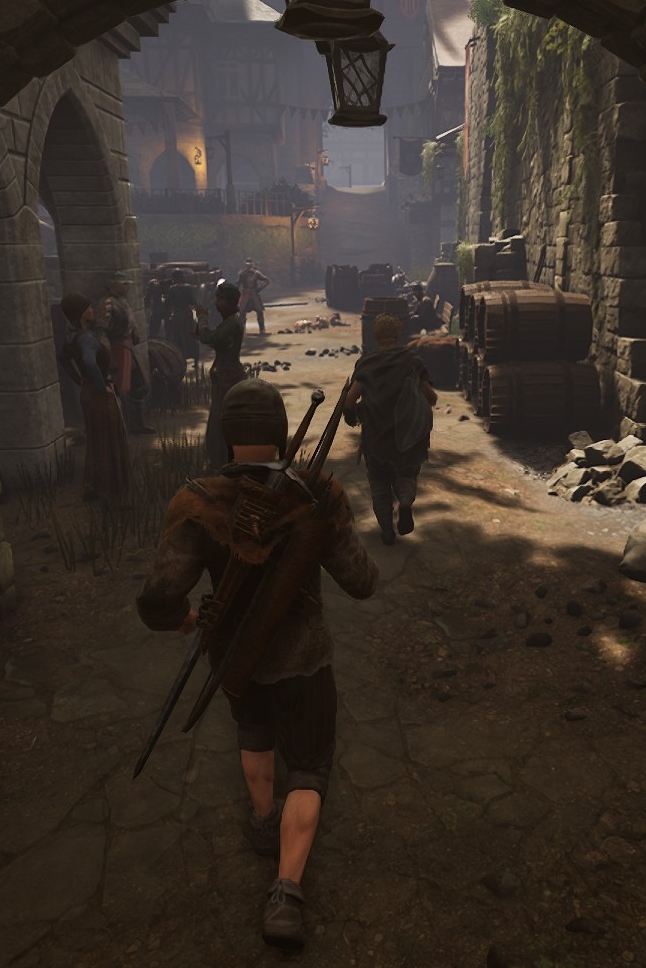
The city of Grayshaft is also too big for its own good, turning it into a maze—forcing the player to spend hours looking for stores to buy equipment or a tavern to rent a bed in. I had to spend half an hour just to find my way out of this jungle of bricks and bandits trying to end my existence. Not exactly enticing me to come back for a visit.
3. Crime & Stealth Systems
The crime and stealth systems are incredibly rudimentary and underwhelming. Most homes are unguarded, letting you ransack them without any resistance from the people living there. If you get caught, though, by looting something randomly marked with “stealing”, there are only two binary choices: Death or pay a steep fine for that uncooked potato you nicked. No prison system, which seems like a huge oversight to me.
Another thing that drags down the roleplaying of a sneak-thief, is that there is, as far as I know, no special damage from a sneak attack—and thieving by itself feels basic as you just pick up what you find useful. You don’t even need to be stealthy, and in combination with the lackluster crime system, it’s just a way of roleplaying that isn’t very satisfying.
4. Loot & Environmental Interaction
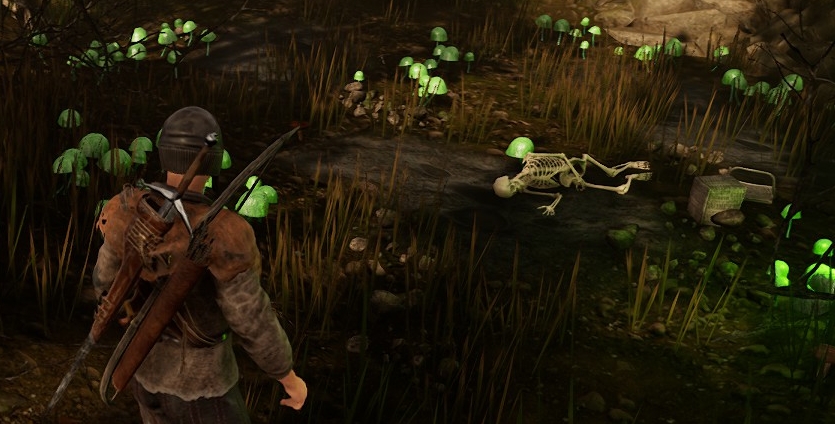
The world, especially the indoor areas, are filled with loot, but in contrast to what earlier RPGs established, much of this loot is there just for decor. You will find flasks, rolls of leather, weapons and similar items scattered everywhere, but only a select few you are allowed to interact with. It breaks the consistency of the game (less systematic), and makes looking for items to pilfer for yourself a frustrating mess.
5. Story & Traversal Pacing
Cutscenes don’t match the player agency—for example, Tristan (the protagonist) at one point showed to be extremely afraid for his life in a cutscene. However, the problem with this is that I had been in countless encounters with bandits and monsters, so something like a simple one-man ambush shouldn’t have scared Tristan half to death. If this moment had occurred much earlier in the story, it would be fine, as he is a fish out of water after all. But this took place hours into the story, with the player almost guaranteed to have several fights under his belt.
Traveling eventually also takes its toll, as there is no way to fast-travel, which is fine by me—as I always try to avoid teleportation mechanics unless it’s linked to the narrative. But the world, as mentioned before, is huge, and many quests ask you to run back and forth across the island. It becomes tiresome fast, so I have to ask why not even have a carriage system between major towns? No, said the dev-man, you must walk!

6. NPC Quest Resolution
Many quests finish in a very underwhelming way, not fit for this specific RPG genre. Instead of having the NPC walk home, after, say, saving his life, the screen just fades to black, with him teleporting away. In Skyrim for example, you could follow the guy all the way home, which is excellent for immersion—and useful, to find a new settlement, or just to figure out where he lives. This is, of course, an easy shortcut for the developer, yet it’s one of those things that cut down on cool details and systems that make this particular brand of RPGs unique.
7. Combat Balance
Point seven has me a tad uncertain, since all the classic games in this style have more or less the same system in place. The main reason I decided for its inclusion is that the devs have made Dark Souls part of their branding. But as I see it—weapon damage, and stats might have a little too high impact on monster fights, neglecting player skill for a more linear style of a tier system when it comes to weapons.
When I found my first two-handed sword, it suddenly trivialized all combat involving “younger” creatures—going from five to ten cuts with my rusty sword, and a lot of dodging, to one or two casual swipes with my two-handed sword. The next step of monsters seems to follow the same premise, which makes progression feel a little inorganic. Yet, take this more of a half-a-point, than a full point of the critique, as Gothic, Risen and Skyrim essentially follow the same tier of difficulty.
Valid counterpoint:
“After playing more, I feel I have to polemize with this point. The sudden “power jump” when you equip a better weapon is a positive, rather than “inorganic progression”, as it’s not just about finding a new weapon, but also about putting the points in to be able to wield it (sometimes after much grinding to level up). Without it, progression would, in fact, not feel fun. If you put in the points and equip a new sword, you want the jump to be there – it’s the reward for all your toil”.
—thesecret1 (RPG Codex)
Conclusion
While Of Ash and Steel is still a fantastic throwback to great and unique RPGs of the past that had a focus on the living-breathing world aspect—the sandbox nature of the game sadly feels thin in places, which keeps it from becoming a new all-time favorite. That’s not to say that it’s not an ambitious title for a first release by a new developer (Fire & Frost). It’s also a game that will provide many hours of fun—it’s just hard for a veteran (and lover) of these kinds of RPGs to just glance over the issues when you know how much cooler things can be.
I’m far from finishing the game, so who knows where it will take me. But I doubt any of my issues will change much, since the mechanics have already been established in Chapter One (beside my map problem, probably). Still, I want to recommend Of Ash and Steel, because despite my complaints—it’s an entertaining RPG in a sea of mediocre releases. Just set your expectations within reasonable levels!
Thanks for reading
– Thomas
 Tom's Gaming Vault