
It’s once again time to assassinate a bunch of folk. From people of history to the lowly unknown guards, just doing their boring job of walking back and forth, thinking about their life decisions. To eventually not change one thing, so the Templar-Assassin’s Brotherhood war can continue in perpetuity. Yep, I’m going into Assassin’s Creed Chronicles: China a bit salty. It’s because of the drawn out modern-time plot of the Assassin’s Creed franchise that never seems to go anywhere. However, I’m pleased to say that the gameplay is top-notch, even if the story is a standard revenge type of thing, in the usual Assassin’s Creed manner.
Revenge is a dish best served bloody
With China being the setting, you get to play as the Chinese assassin Shao Jun. She is the lone survivor (almost) of the Chinese Assassin Brotherhood guild after nearly being wiped out by the Templar order. And per usual, it’s a tale of revenge, with some history sprinkled on top here and there. Namely: the Mongolian invasion. There is also an Eden device involved, but we don’t get to see it, just hear about it. That’s basically it, except from background lore in the form of scrolls that flesh out the protagonist. What I found funny (common in Assassin’s Creed storylines) is that while the focus is more on the personal level, the main conflict that controls everything leads to absolutely nothing. Meaning that the struggle for removing the “evil” Templars is futile in the grand scheme of things. The game even says so at one point, and well. We know that history didn’t treat China with the kid’s glove going forward, if we put it like that.
Sneaking, jumping & stabbing
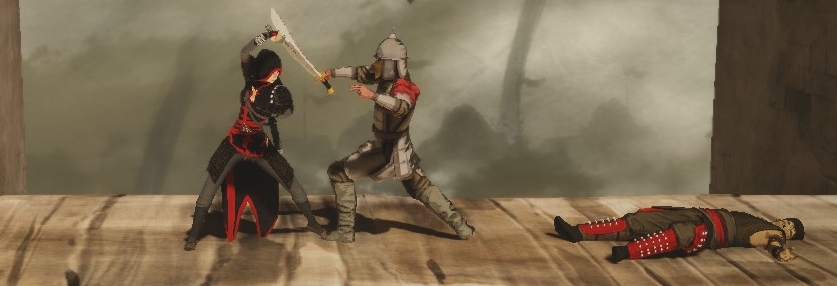
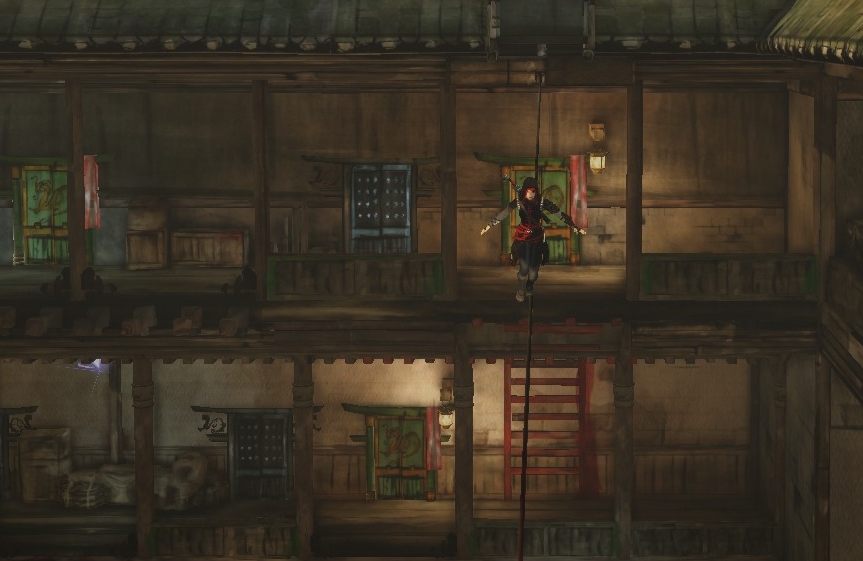
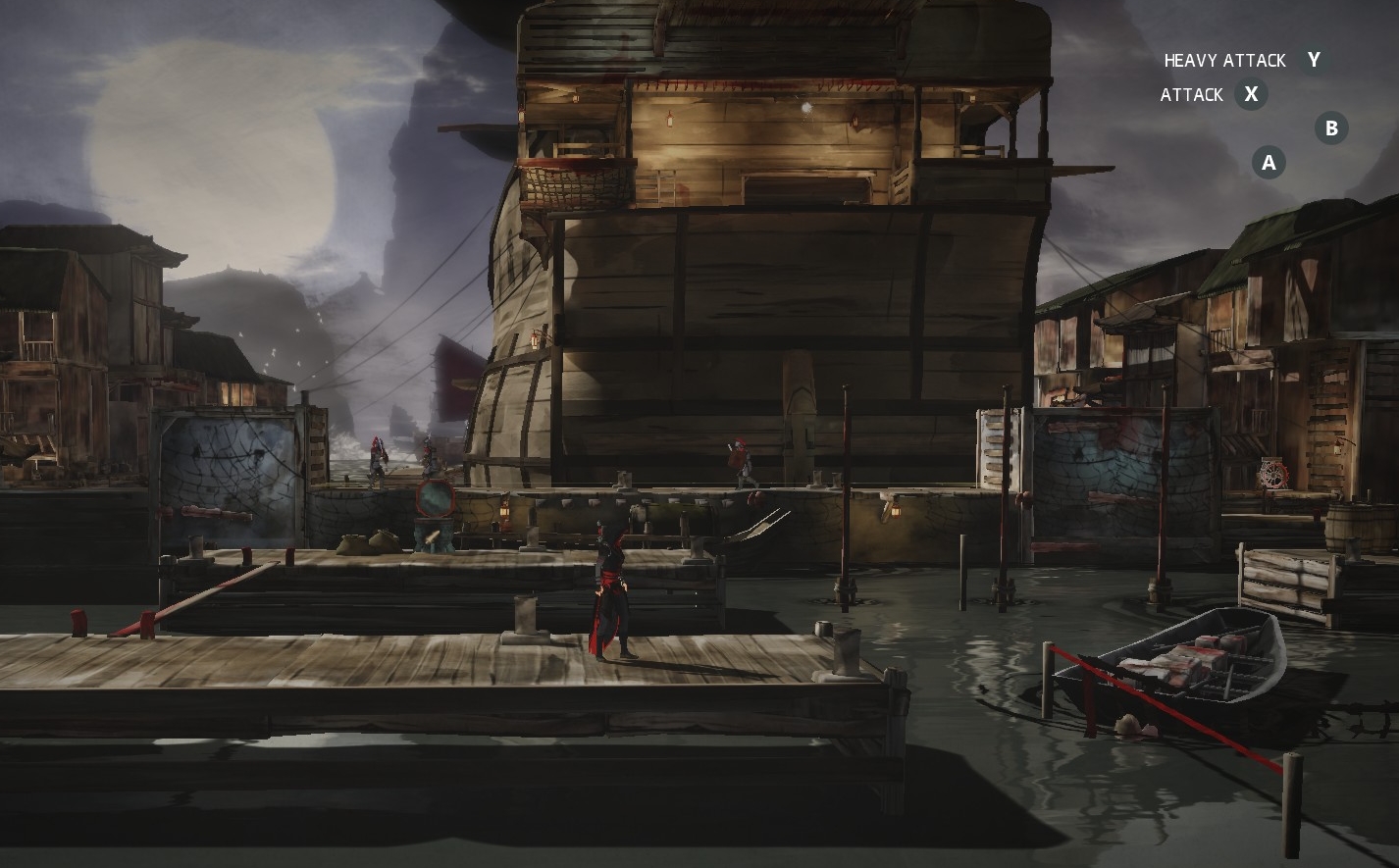
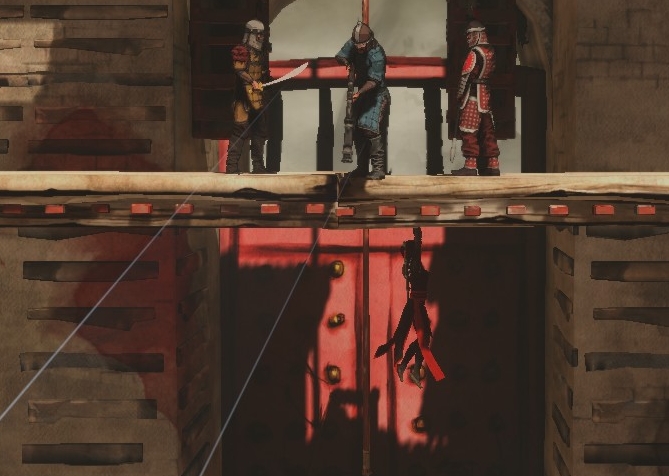
The gameplay is a totally different story. Instead of feeling mediocre like the plot, the gameplay is excellent, thanks to its smooth controls and 2D environment with 3D elements. At its heart, it’s an action-stealth side-scroller, which sounds like a dime a dozen. But what makes it unique is how the game uses both foreground and background in the levels. You will constantly move between them, which opens up different paths to your objective, and of course secrets to get your grubby hands on. These 3D elements also come into play when evading guards, as ceilings, door openings and such work on a 3D plane. It means that you can drop out on the side of the roof, for a quick kill or to make an escape. It works really well, and looks very smooth to boot.

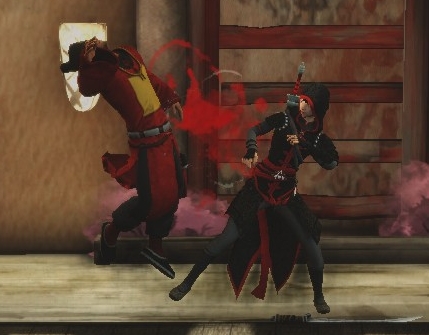
When it comes to stealth and combat, it works in a fairly regular way. You sneak up to a dude, stab him in the spine, and turn the blade. After a kill, you can either let the corpse be or hide it somewhere. If a guard discovers a dead body, they will go into a state of alarm, and look for a culprit. The alert state resets quickly. However, the game will punish you for this in different ways. The direct way is combat, if you get caught that is, or additional reinforcements will enter the map, if you are in an area for that. But, it will also punish you in other ways, as stealth (ghosting levels) rewards the most points. Each time you get discovered, or get into a fight, you will lose out on a lot of points, which means that you will be missing out on upgrades at the end of the level. You see, each upgrade is unique for each stage, and you need to reach a certain threshold of points to get it. It’s not necessary, as I didn’t perfect my playthrough for Assassin’s Creed Chronicles: China. Yet, it’s a well-designed system that prompts you to do your best, while it punishes sloppiness. It also allows you to continue playing with your screw-ups. I certainly liked this system!
The stealth system has plenty of tools for diversion, or plain out killing, since you can do it from many positions. From above, the sides, underneath, and sometimes you can even use the environment to crush your enemies into a sludge of bone and meat. But as the game wants you to sneak, most of the tools are for diversion for you to slip by unnoticed. That doesn’t mean you can’t use them for killing, if you rather do that than leave anyone alive to tell the tale. Whistling on people, just to wait for them to slowly walk to their doom is a classic.
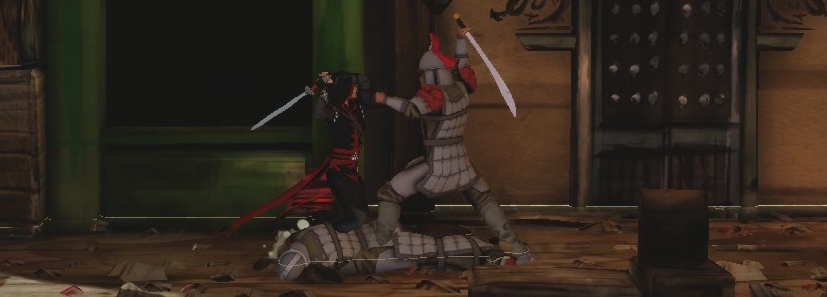
The combat also has its perks of fun. You block by pressing a button, and the stick in the direction of the attack. It’s easy enough in the beginning, but it quickly gets harder when the Chinese guards learn a few new tricks. It also gets incredibly tough when you are surrounded. It looks damn cool when you manage to parry attacks coming from both the front and the back, though. You can also do different maneuvers while in combat, like switching sides for a backstab, or a counterattack to unbalance your foe. It’s not exceptionally deep, yet, it’s enjoyable enough for not being the focus of the game, as combat is secondary. You can of course also flee from combat, made easy through the responsive controls. I played on PC with a PS4 controller. While Ubisoft does not support PS4 controllers natively on PC, it’s an easy fix through the program DS4 Windows, which can emulate a 360 controller.
A moving painting
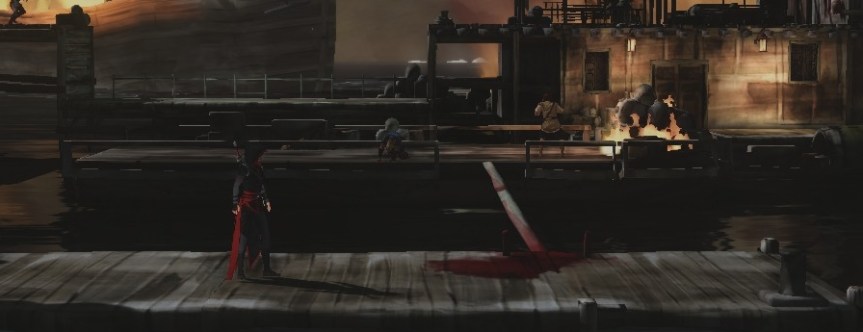
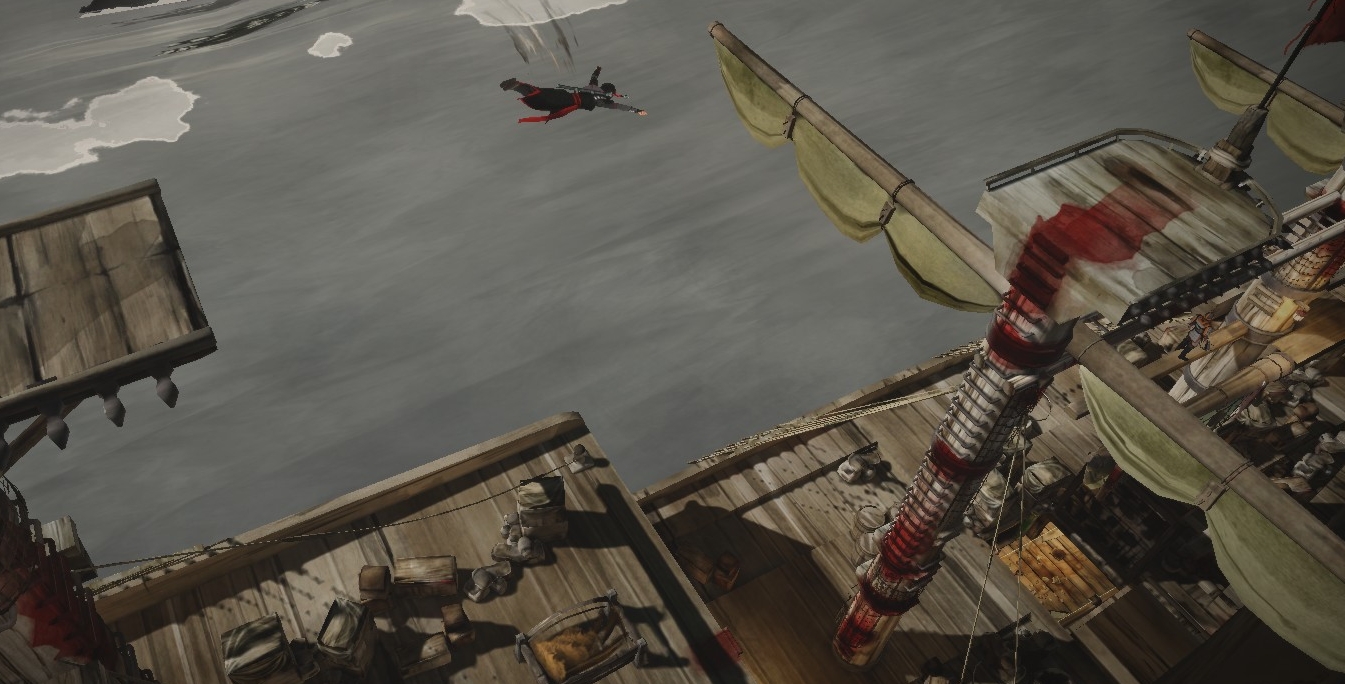
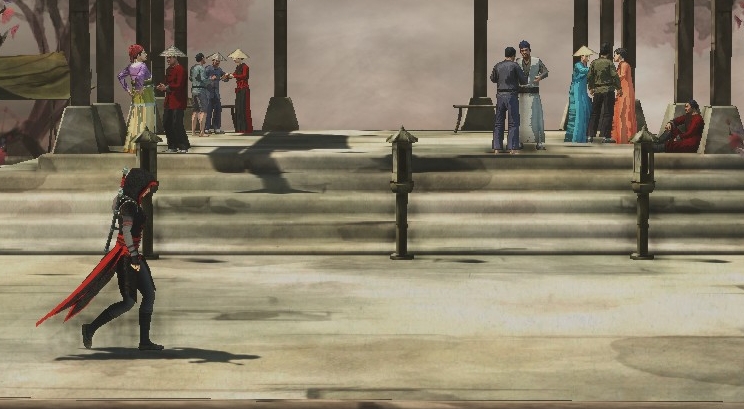
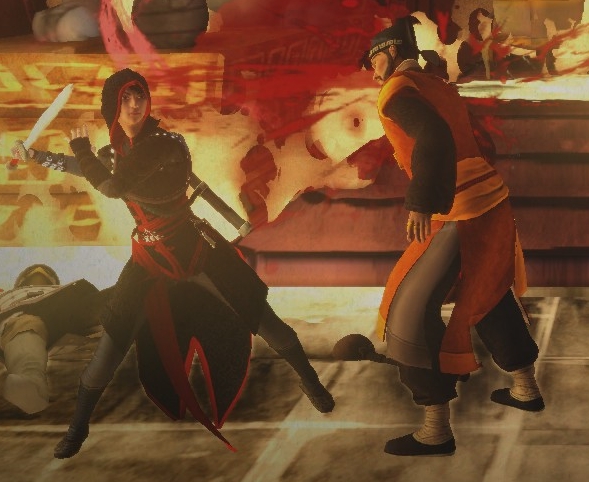
The visuals look good, in a style I can best describe as broad painting strokes. It’s not overly messy, but it got a certain “sloppy” vibe to it. The cutscenes are presented similarly, and overall, it looks excellent and unique. In other words: it gets the job done. Also, thanks to the moving background and foreground, Assassin’s Creed Chronicles: China comes with awesome vistas from time to time – surprisingly so for a 2D platformer. The sound I didn’t find impressive. The voice acting, the little there was, came across as flat and uninspired. Sound effects and music work out alright, but it felt a bit quiet, with very little cozy ambiance to listen in to. However, in total, the presentation is more than fine for what it is.
Conclusion
I had an awesome time with Assassin’s Creed Chronicles: China. The little story there is didn’t feel very important. Nor on a personal level, or for the grand narrative that is Assassin’s Creed. Yet, it’s okay for what the game set out to do. It’s not a very long game, but it should be pointed out that there are two more games in the series. Assassin’s Creed Chronicles: India and Assassin’s Creed Chronicles: Russia. I have not played them yet, but from what I gather, they follow in the footsteps of Assassin’s Creed Chronicles: China concerning the gameplay. If it’s anything like this, you can add two more titles to the playtime. I will surely try them out soon, so expect future reviews. And with that, I want to end this review with a solid recommendation, if you enjoy stealth, and 2D platformers.
Thanks for reading.
/Thomas
| System: | PC (Ubisoft Connect) |
| Played with: | PS4 controller with DS4 Windows |
| Release year: | 2015 |
| Mods/fixes: | DS4 Windows |
| Enjoyment rating: |  |

 Tom's Gaming Vault