

It’s time to go back to 1998 and take a stroll down Westwood lane. Well, almost anyhow. According to the Wiki page, it was actually made by Intelligent Games Ltd, while Westwood published it, as far I understand. A bit surprising to me. But the genetics of a Westwood title can be found in Dune 2000. It even got the cheesy FMVs (full-motion-videos) between missions, and the engine used for gameplay is the Command & Conquer one. I remember trying this game back in the day, and I wasn’t too impressed, seeing as it was mostly a reskin of that game. However, now some 20 years later, I couldn’t care less. I should also add that Dune 2000 is a remake of the legendary RTS game Dune II: Battle for Arrakis. When that game came out, it blew my tiny mind. It was my first dip into the RTS war-gaming sea, and ever since then I fell in love with the genre. I suspect this story is the same for many millennials.
Technical stuff
Dune 2000 is currently abandonware. Meaning, you can’t buy it anywhere, digitally, at least. That also means it’s basically free to download and play, since nobody has bothered to claim the rights to it. So, if you want to give it a go, the Collection Chamber got you covered. Just go to the game page here, scroll down to “download” and get the game. It’s a very easy installation.
Seeing as it’s based on community based OpenRA, I found the resolution way too high, making everything look like ants with me looking down on the battles from a satellite. When I play something nostalgic, I want it to look the part (for the most times), and feel the grit! To fix this, if you are like me and want it to look like from the memories, is to first open Dune2000Config.exe that can be found in the installation catalog.
The first change is to the resolution. On a 1920×1080 monitor (which I use), a resolution of 960×540 is perfect. It will maintain a perfect widescreen 16:9 aspect ratio, but will have way lower resolution, making the battles feel way more zoomed and personal. You can almost taste the spice! Also, make sure to use Borderless display mode. Fullscreen is a mess, since the game switches around programs constantly, forcing the screen to blink off and on. When this is done, go to advanced settings. You will find it at the bottom left. Go to video options directly if you don’t want to change anything here. I lowered the game speed a tad, since it was way too fast for my elderly brain.
Under video options, it should look like this:
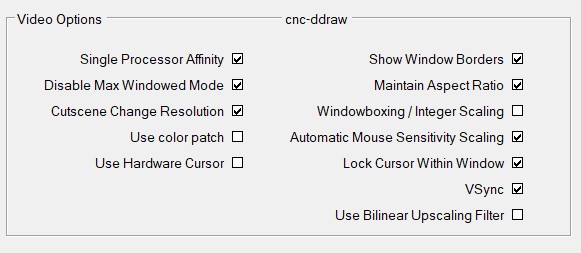
The biggest offender here: Use Bilinear Upscaling Filter. This option will make everything very blurry, hiding the juicy jaggies. You actually want them, for once. I turned off Integer scaling, too, since often when used on a 1920×1080 monitor, it will leave black bars on the side. It’s mostly for 4K stuff, from what I know. That’s everything, if you want the game to look somewhat how it did back in the day, but now with widescreen support.
Arrakis
The Emperor has sent out an invitation to the three greatest houses in the galaxy; those that can harvest the most spice on the planet Dune, will be the one to control it. This challenge comes without any specific rules, so naturally – endless desert warfare it is. Despite having men dying, and vehicles burning in the scorching heat of Arrakis, it’s worth any loss, if there is any possibility of winning. The spice (melange) is the most important substance in the galaxy, making it worth any risk. Beyond its enhancing abilities in humans, it also makes interstellar travel possible. Yeah, it’s one hell of a drug!
Who are you going to be? The knightly Atreides with their cool ornithopters? Or the merchant like Ordos, that pays others to do their dirty deeds? Or perhaps the wicked Harkonnen that values strength before anything else?
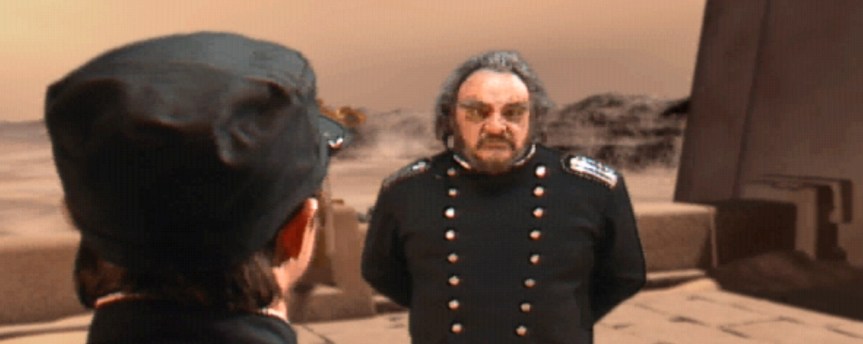
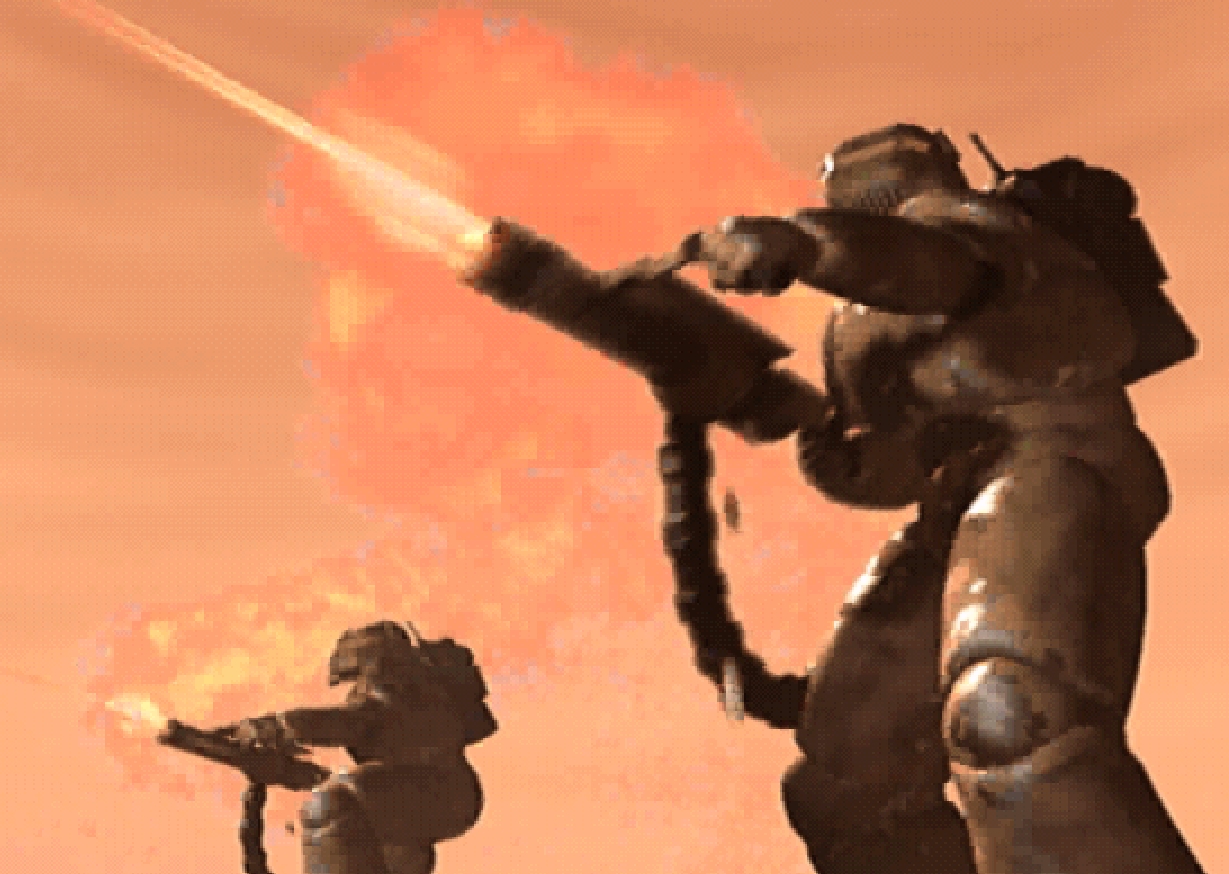
Well, regardless of your pick, the campaign plays out very similarly, except for a few exclusive units, and of course who presents the FMV mission briefings between assignments. It’s actually the main reason for replaying the game, as the tone of each house, and how the briefings are presented are very different from each other, even if the campaign plays the same. It’s cheesy, and damn fun to watch, and I truly wish we got more of it. With Dune 2000 only being nine missions long, there isn’t too much we get narratively, except what the premise of the story promises us – all out warfare. And that’s good enough, I guess, but once again, these filmed segments are definitely the highlight of the campaign.
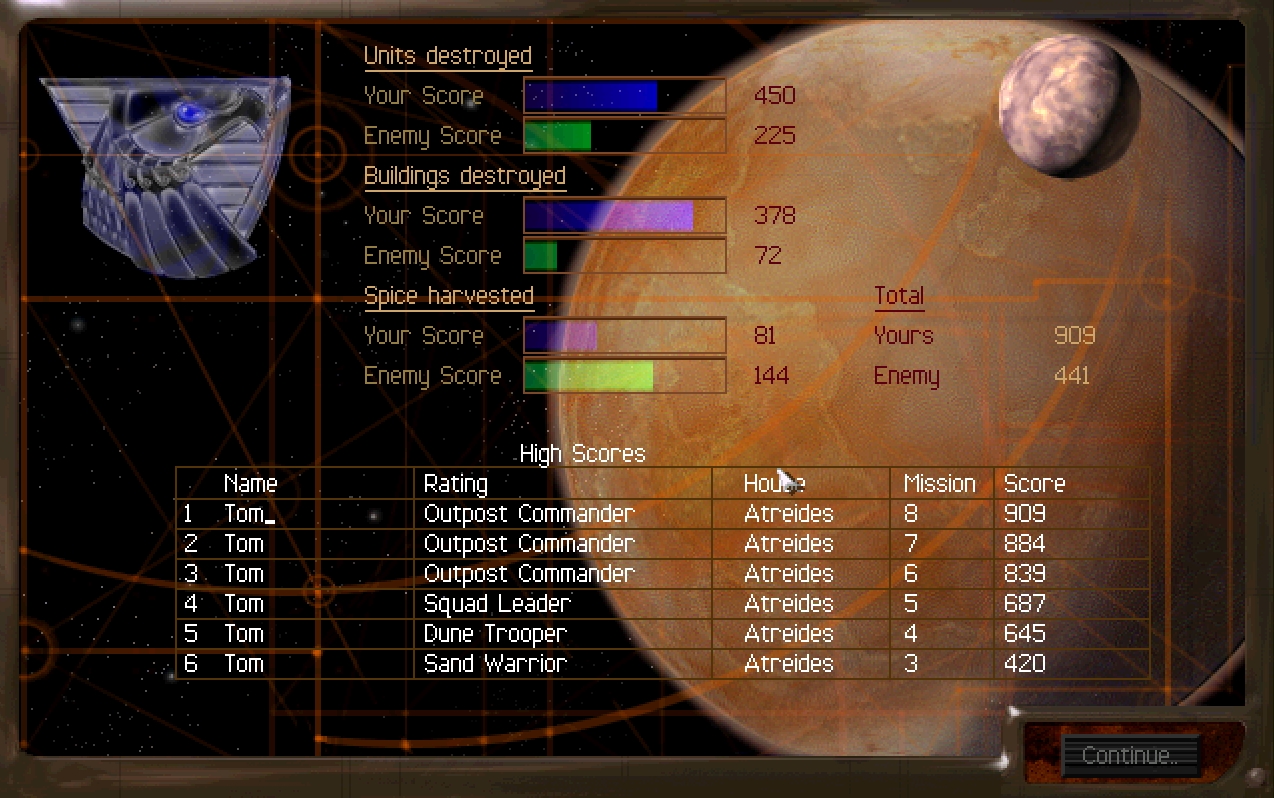
I played Atreides, and the actor John Rhys-Davies delivered my orders between skirmishes. What I found amusing is how he fell deeper into his addiction to spice, after having a quick drink spiced with melange in one of the early videos. However, the presentation of Atreides is pretty clear-cut (militaristic), and “boring” compared to the more insane Ordos and Harkonnen. Make sure to pick accordingly! Overall, the story was entertaining, and it managed to get me into a sci-fi mood, a state of mind specific to Dune – like this franchise always does – book, game, or movie!
Endless war
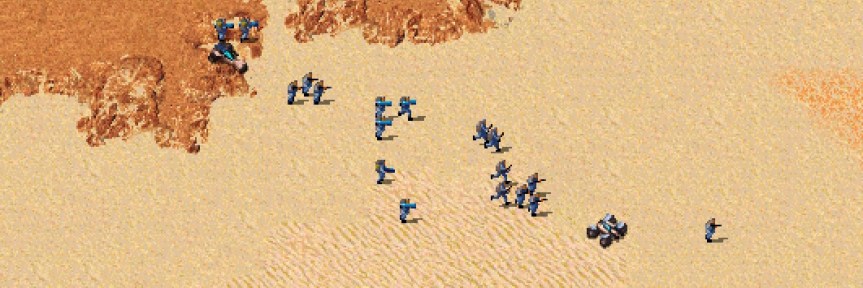
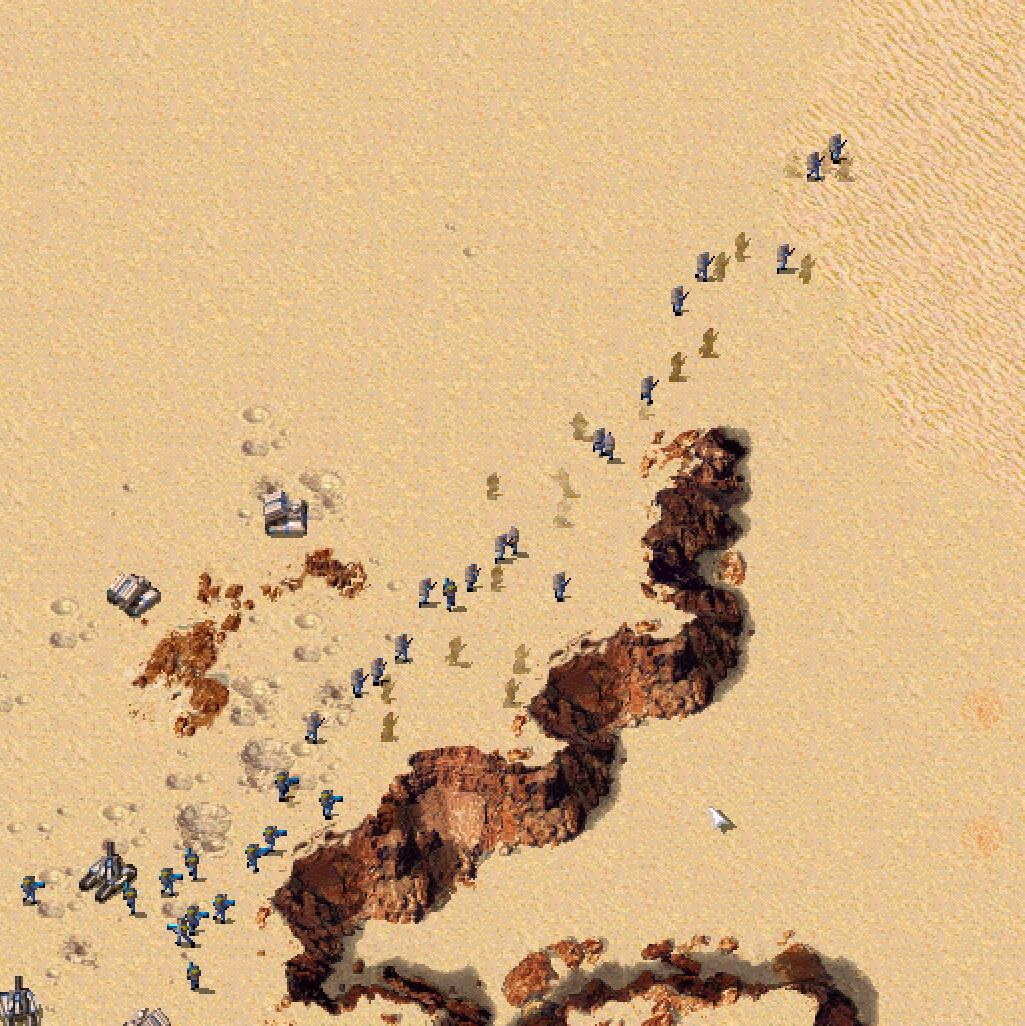
Now, with Dune 2000 having a few years to its name, it can feel a bit old when it comes to certain mechanics. For example, you can’t queue up production. You have to click for every single infantryman produced, which can get tedious when you want an army fast. Another annoying problem is how the AI is handling mass movement of units. It’s a damn mess, with the worst kind of congestion you have ever seen. At times, when units can’t find a direct path, they instead decide to take the long way around through enemy territory. I wouldn’t be surprised if my casualties were 20% from this problem alone.
The bandied solution is to use smaller pack of units, but it becomes suicidal when the enemy somehow managed to reach the battlefield with his whole army intact. Unit cohesion is not part of the desert warrior’s vocabulary, I guess!
Beyond a few quirks like these, the game holds up well, and is very enjoyable. It even invites the use of tactics, when the controls and the AI allows for that. A few more things that I think differentiates Dune 2000 to more modern titles is the concrete tile system and the amount of friendly fire incidents. These things are however not of a problematic nature. They are just interesting mechanics that add a little carnage to everyday RTS life.
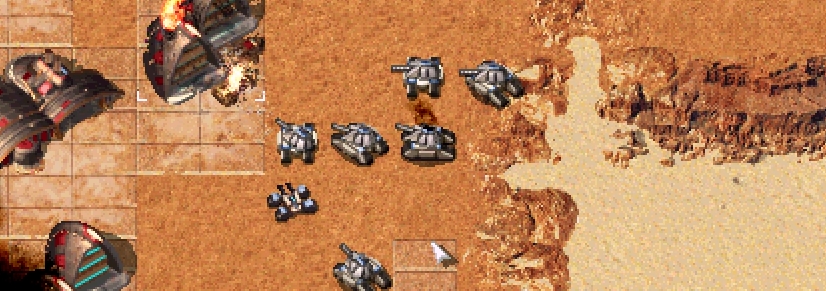
Friendly fire: isn’t
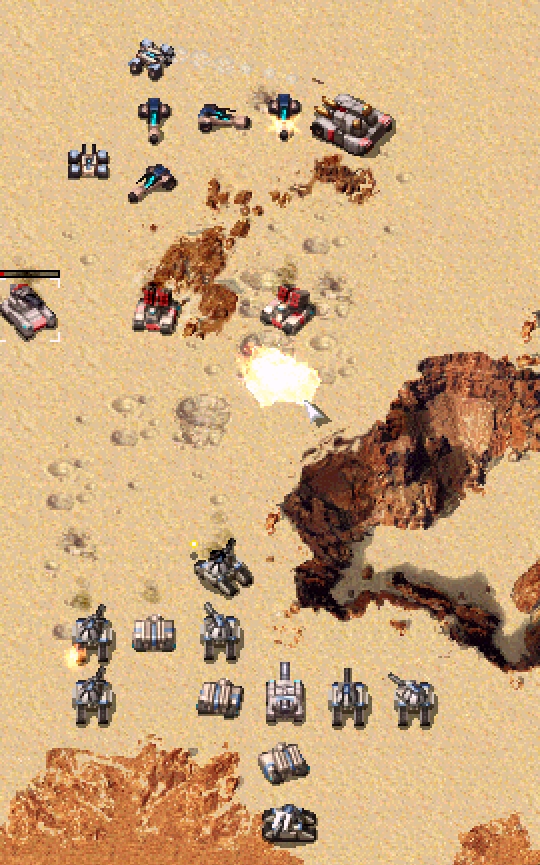
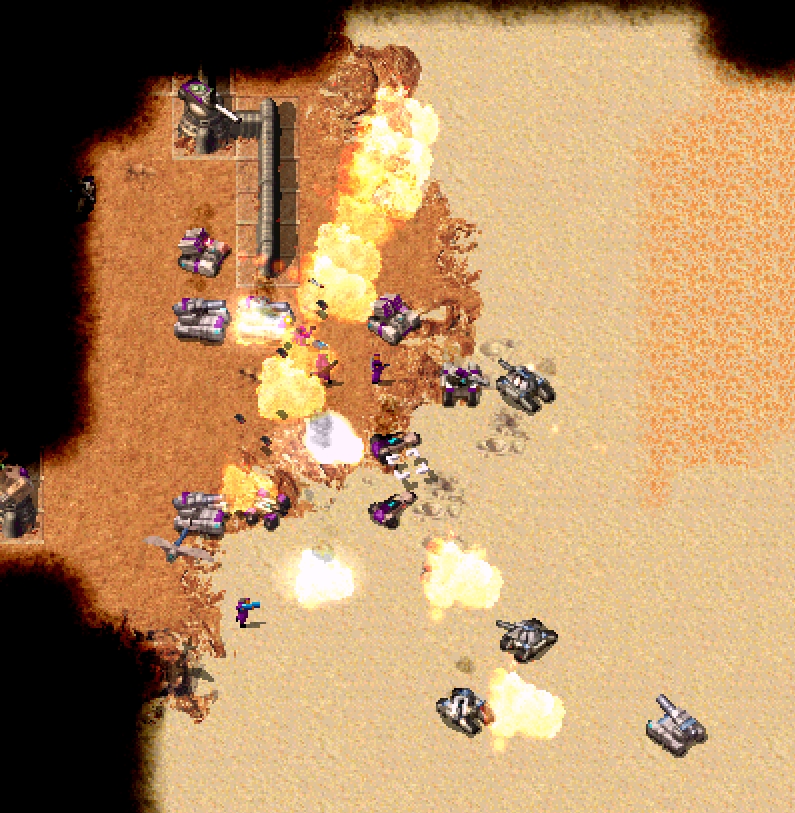
The friendly fire casualty rate is extremely high, and the reason for that is that units that use explosives have a splash damage effect that does not care if a unit is friendly or not. And the radius is large! Every shell will inflict some kind of splash damage, with buildings that explode inflicting the most. It was not uncommon for at least half of my infantry to die from friendly fire. Hilarious in a way, sad in another. And the Atreides special unit, the sonic tank, does not care who stands in front when firing. The sonic energy will tear anyone to bits that’s in front. This stuff is pretty cool, but some vehicles must be used in moderation, thanks to the extreme damage to friendlies.
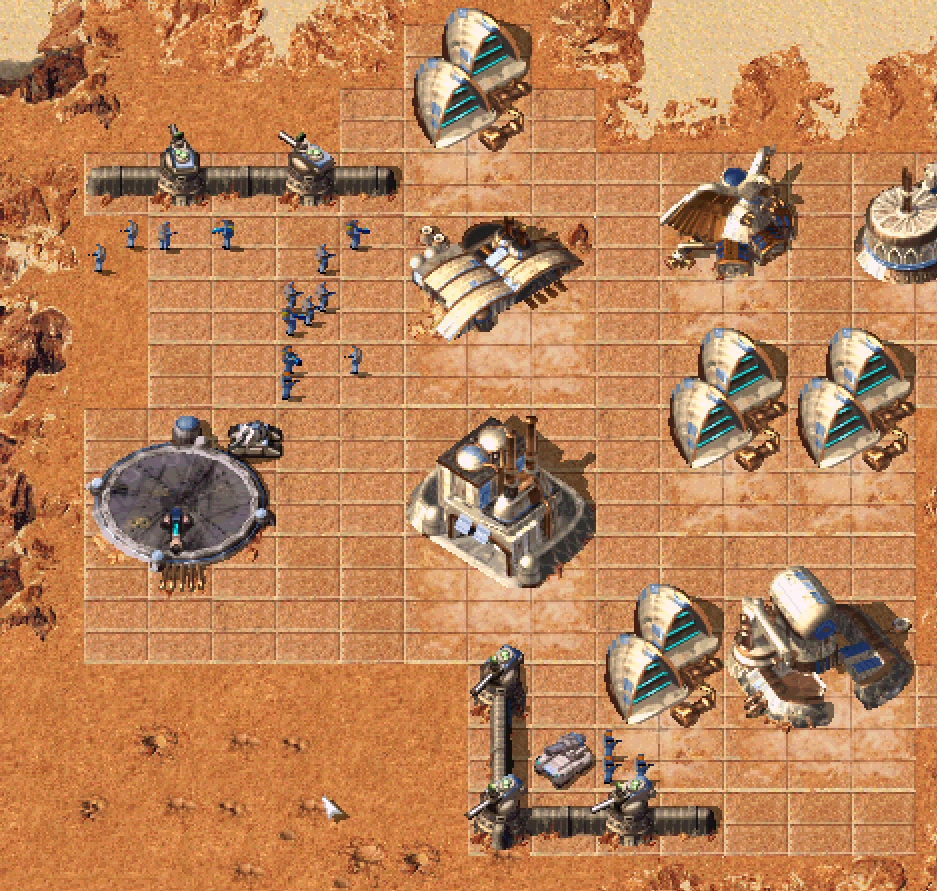
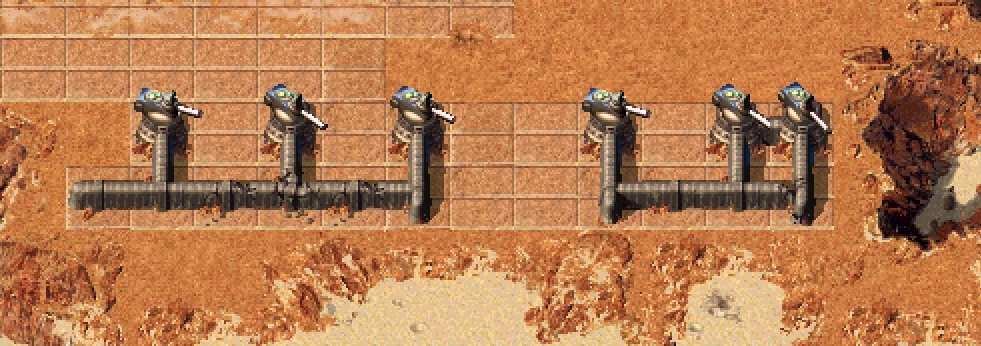
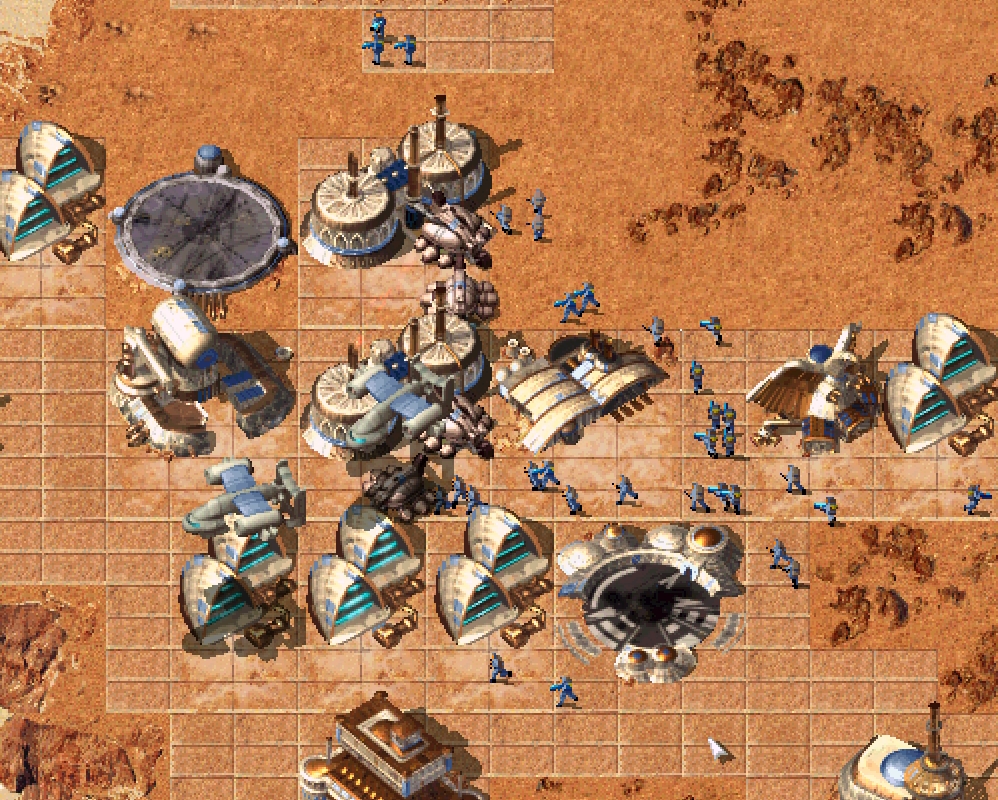
The concrete tile system is also interesting. To be able to build stable buildings, it’s preferable to build them on top of large concrete titles. This means that you must build the foundation first, before the actual building. You can build without using the titles, but then the structure will take continuous damage from the unstable ground. I liked this mechanic, since it acts as a natural limit on where you can construct, and it makes sense lore wise. You are on an unstable desert planet with giants worms snaking through the sand, after all.

When talking about worms; let’s just say they are a cool aspect of the lore, but they should be a lot more terrifying than they are in the game. The only danger the worms provide is in the beginning of the mission, when a swallowed harvester can mean game over. After you establish yourself on the map, they become as docile as a fat, lazy cat. Who cares if they eat a measly car, among the dozen of heavy tanks rolling towards the enemy wall. Even so, I’m glad they are here, as they are a crucial portion of the Dune mythos, and it wouldn’t be the same without these strange creatures roaming the world.
Finally, another change to modern RTS games is how the fog-of-war works. It has a fog-of-war system in place, showing the world in perpetual blackness. The difference here, when the unexplored areas have been uncovered, they remain so permanently. This means you have a perfect view of the map, at all times, making it very easy to spy incoming enemy units. Personally, I prefer the modern take on fog-of-war, as it adds an uncertainty to the combat, and makes use of another mechanic to master: reconnaissance.
You got time?
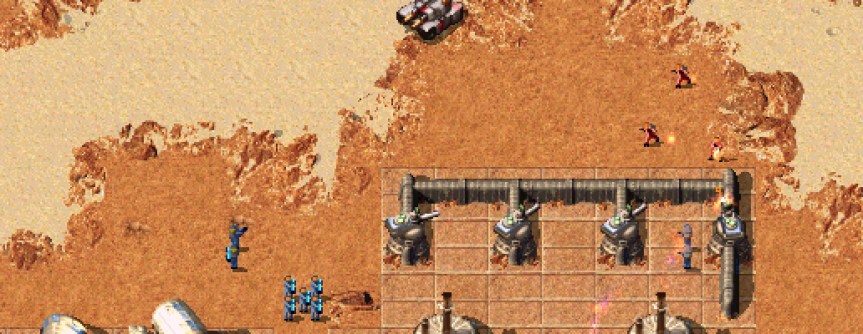
All in all, the missions are enjoyable. The missions have a nice scale. They all involve building up a well-functioning base with a big spice turnover, and then turning the credits from the spice into a massive force to finally eradicate your foe. However, I have to say, you have to make sure you have time on your hands when starting certain missions. The maps are huge, and you will be battling up to three factions on some – and the utter annihilation of a dynasty takes time, you know!
It’s clear this is old school, seeing as most modern RTS games end way too quickly nowadays. I really appreciated this aspect, having a long back and forth with thousands of dead – it instills a sort of respect for your enemy, and the battlefield where now all the dead rests. Then, when you finally pound your nemesis into the ground – well, there is no better feeling! Finishing Dune 2000 felt like an accomplishment, and that’s a damn good thing.
Some helpful strats is to build at least two refineries before anything else. When you later construct a heavy factory, spam those harvesters, but make sure you have carryalls (transport aircraft) to accompany them all. If you do, you will soon be rolling and sniffing spice all day long. And before building up a force, make sure your defenses are up to scratch. Build those canon/rocket towers, and make sure your electric grid can handle the load. Slow down on powerful units that chew through your own units. Destroying an enemy tank is not that helpful, if the shot took out five of your own. And finally, infantry might lose their edge fast, but still bring some into the huge vehicle battles late in the campaign. Not for damage, but for targeting bait. When the enemy is busy shredding the poor schmucks in the infantry, they are not targeting your important rocket tanks. Just make sure they don’t bleed out in the sand in vain, though!
The desert look
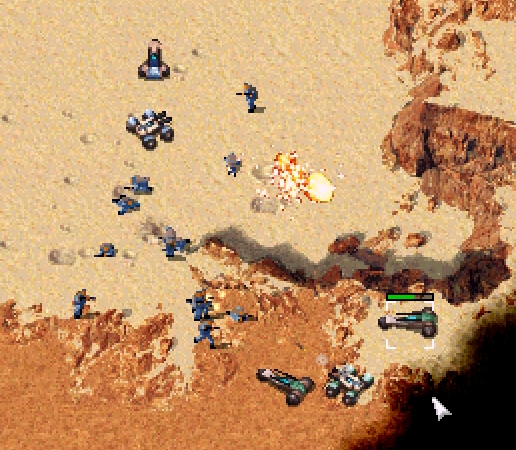
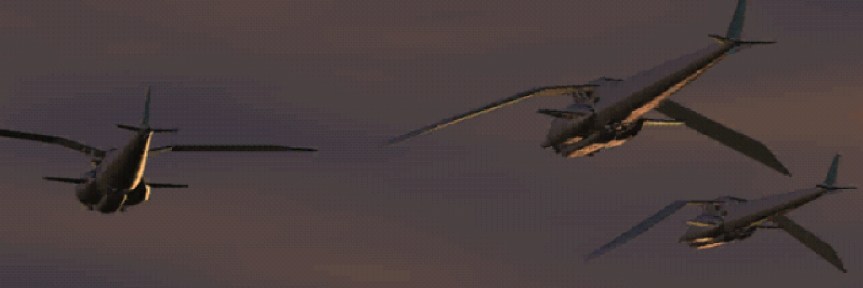
The graphics are pretty old by now, yet, I think they convey what they set out to do excellently. The pixelated sprites of all the units are very charming, with the nostalgia coming in strong. Especially if you have played the Command & Conquer series, since many animations and units seem to be lifted straight from that game. The planet Arrakis also looks the part. It’s sand, and orange desert rocks all over. You can sense the unbearable heat, just by looking at the desolate landscape. The terrain even gets these pockmarks of war, pretty nifty!

If you expect, or hope for something else to switch things up, you are out of luck. I didn’t mind myself, though, thanks to the interesting setting. However, I think any other game that just has a different variant of brown to the environment would eventually suffer, and be called out for its monotone visual style. The unit pictures are unfortunately way worse compared to the originals. They are just bland, when you measure them up to the classic pixel art. It’s a small issue, but the cool art feels missing.
The FMVs are fantastic though, and it’s clear effort went into the aesthetics, even if the scripts for these segments can feel a little lacking. While the unit art is bad, the quality of the FMVs more than enough makes up for it. The sound is also good, with Frank Klepacki making the music once again, so you know it will be great. However, I do feel the maps lack in ambience sounds, like hearing the desert wind whistle by while your troops wait for conflict.
Conclusion
Dune 2000 is a fun RTS, well-worth the download and the invested hours. Yet, it can’t be denied the production feels somewhat haphazardly put together, as it’s a remake using an already established engine for another game in the genre. If a game like this were to be released now, it would be hard not to call it “cheap”. Despite all this, it’s a good and fun experience, if you are looking for a sci-fi RTS in a cool setting, and mechanic wise, it’s a lot better than the original it’s based on. Since it’s currently free, you can’t go wrong either way, if you have a yearning for a long, grueling war in the desert heat.
Thanks for reading.
/Thomas
| System: | PC (The Collection Chamber) |
| Played with: | Mouse & keyboard |
| Release year: | 1998 |
| Mods/fixes: | Easy Widescreen fix |
| Enjoyment rating: |  The spice must flow |
 Tom's Gaming Vault