

Welcome to this report on Knights of the Chalice. This is not a true review, since I’m far from the ending, as the game seemingly looks to be huge, with plenty of monsters and evildoers needing vanquishing. Treat this more as an ongoing field report in appreciation of what this title offers. The way I’m playing it, it fits better as an audiobook companion (don’t judge me!) than a full RPG experience that requires your complete attention—even if it does need it for success in the hairiest situations.
You see, this is a Dungeons and Dragons fighting simulator where the story only serves to take you from one challenging battle to the next. Knowledge of the DnD 3.5 ruleset is mandatory, or the orcs will make sheesh kebab out of your heroic group of adventurers before you even have time to unsheathe your sword.
Land of trouble
As mentioned, there isn’t much to the story, but it’s there and works like glue—holding the whole gaming experience together, giving it some meaning more than just bashing bandits on the head and looting their bodies. The adventure starts with you making your own party of four from the classes Knight, Wizard, and Cleric. Not too many, compared to many other RPGs of a similar nature. However, it consists of the core of any dungeon-crawler group, and honestly, it still makes for a fun combo of adventurers—fit to face anything the abyss will throw at you. I picked two knights, one with sword and board, and another with a two-handed spear, ready to tag team any smelly orc. The rest of my group consisted of an AOE-centered wizard, and a cleric of master wand-making.
Once your team of slayers is created, you are quickly hired by a knightly order to retrieve a holy cup, but so far in my adventure, it hasn’t mattered yet. You are more or less there to clean up the bad neighborhood of Crimson Coast—and boy, this area sure has a lot of problems, from bandits to dragons to menacing evil talking spiders. What’s cool here is that the quests are actually connected by a story (the little there is), involving wicked slavers—kidnapping people for nefarious deeds. It’s rather charming to follow, in an old-school, late-night, in-front-of-the-386 role-playing kind of way, even if picking dialogue options and making deep moral decisions are left in the dust in favor of combat. In the end, violence solves everything—who knew?
Master of slaying
First off, this is not an official DnD game, so the rules for battle are a simplified version of it—dropping almost everything outside combat. Forget about picking locks, charming the pants off people, or sneaking around to steal a kiss out of a fair princess—this is all about the killing! One example of the streamlined ruleset is that wizards don’t have to memorize spells before using them in combat. The stuff you learn is always available; however, you still need to rest. So, you can’t spam fireballs at every critter you encounter, as usability is still restricted to certain uses per “day”—determined by level. This is balanced by the fact that resting spots are restricted, meaning you have to find a predetermined location instead of resting at will, like in Baldur’s Gate.
It’s a good balance choice, which forces you not to take too many grievous wounds between battles, as healing will be in short supply—at least in the beginning. But there is an easy way out of this if you are willing to carry around a bunch of sticks. One of the few non-combat orientated skills is to enhance wands to whatever spell you have knowledge about. It will only cost you some gold and XP-points, which you will get plenty of. For example, this means my cleric can make healing wands that come with fifty uses per pop—and that is a lot! I highly recommend getting this skill on your cleric and wizard. It makes these classes so much better, as they will always have access to their abilities thanks to these created wands—regardless of resting status!
Clashing of swords
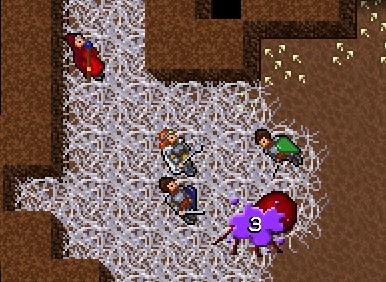
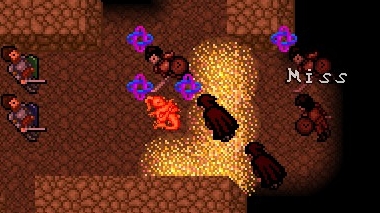
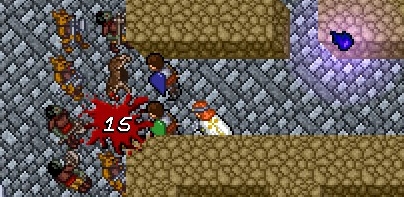
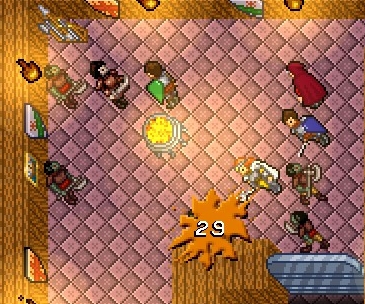
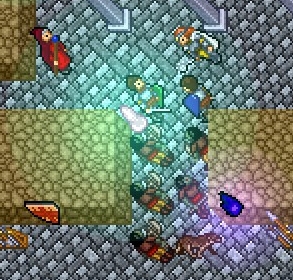
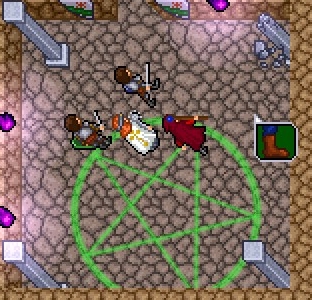
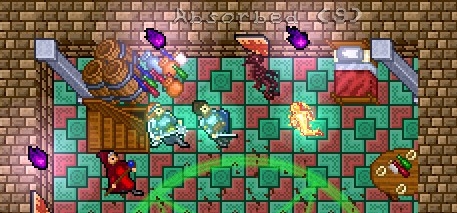
The battles come down to classic tactical turn‑based combat, which can best be likened to The Temple of Elemental Evil, but slightly less advanced. What is important is included here, though, like line of sight, positioning, and blocking paths to create choke points of blood and gore. The enemy AI is surprisingly smart, too, as they often use skills and spells in clever ways to royally screw you up. They love to hold down party members through wrestling skills, like pinning down the always important cleric while she gets to eat axe chops to the brain by another brute. This goes both ways, though. If you are a big fan of revenge acts, you can order your knight to grab their last man to produce an unholy bullying too violent to type out.
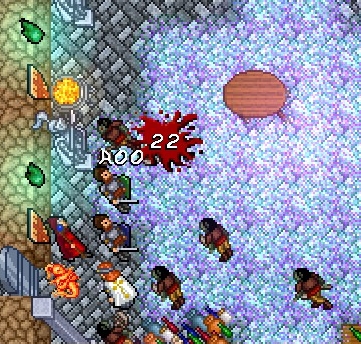
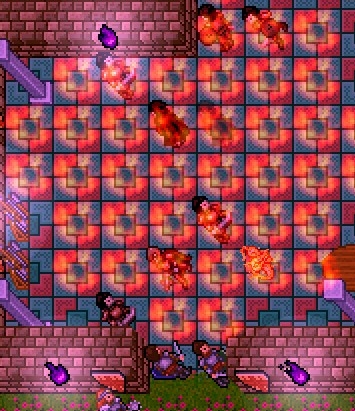
Wizards will be on the receiving end of all dungeon-crawling suffering at the beginning, but like every DnD game in the history of gaming, they will eventually become elemental gods—if they can stay alive long enough without forming traumatic memories of their low-level past. So, while clerics will buff, debuff, and heal, and knights pulverize foes in one-to-one combat, the wizard will become the killing machine of the ages. When you run into a room and see twenty lizard men waiting in ambush, it’s not strange to feel dread creeping in—until you remember that juicy fireball that easily sets fire to their clammy flesh. Then you smile.
Loot for everyone
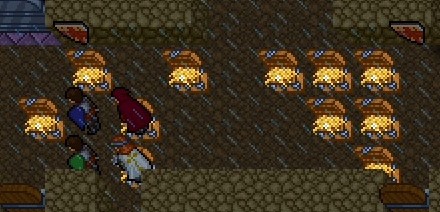
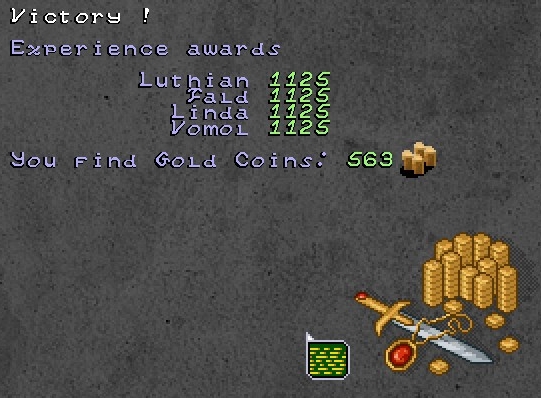
Now, it wouldn’t be an adventure worth playing without loot to collect and equip your party with—and with that, I’m glad to say, this adventure’s got plenty! If there’s one thing that isn’t simplified compared to other games of a similar nature, it’s this aspect. There are rings, cloaks, bracers, armor, weapons, and shields to find and give your brave heroes to make them an unstoppable force of righteousness. What’s also great here is that many of the more special items come with awesome procs—like a spear that sets fire to whomever you stab. It makes juggling equipment a bit more involved instead of just exchanging a sword+1 for a sword+2.
You’ll also need things to sell, as the game actually comes with merchants more than willing to peddle their wares to you, and to take your things off your hands—for cheap, of course. So, for the hoarder out there, don’t fret—inventory Tetris will be a thing if you want to maximize profits!
Conclusion. So far…
Knights of the Chalice has been an absolutely splendid RPG journey so far, albeit a light one—hence the combo of a suitable audiobook to listen to while navigating dungeons. If combat is your main interest in DnD games, the lack of a narration will be of no issue, but for those of us who expect a little more, it can be a downer. That’s why it’s so important to know what kind of gaming experience you’re entering in Knights of the Chalice. It’s not that a storyline is totally absent; it’s just that it’s not the main thing propelling you forward. If you go into the game with this mentality in check, Knights of the Chalice will give you a swell time—and who doesn’t love finding loot and leveling/building up your heroes in any RPG? It’s just that in this game, you’ll be free from narrative outcomes while doing so!
Thanks for reading.
– Thomas
PS. I should mention that Pierre Begue, the solo developer behind Knights of the Chalice, actually has made a sequel called Knights of the Chalice 2. It’s an improved version of the original, being bigger, with more classes and a bigger party. I have not played it yet, but it’s on my list!
| System: | PC (Steam) |
| Played with: | Mouse & keyboard |
| Release year: | 2009 |
| Mods/fixes: | None |
| Enjoyment rating: |  |


Feeling generous?

 Tom's Gaming Vault