


My first impression of the Star Trek: Voyager – Across the Unknown demo wasn’t too great, as it felt more like a proof of concept, than an actual slice of the game. No voice-acting, and everything seemed to have a cheap “visual novel” kind of design, with very little input from you required to do anything. But after the tutorial let go of my hand, I started to see the potential of this title. Now, for the decision-making, and story it never really leaves the visual novel phase, but as a complete package, I’m captivated regardless. And that is largely thanks to the ship management, exploration mechanics and how crew skills play into your judgments, and success.
The Voyager story
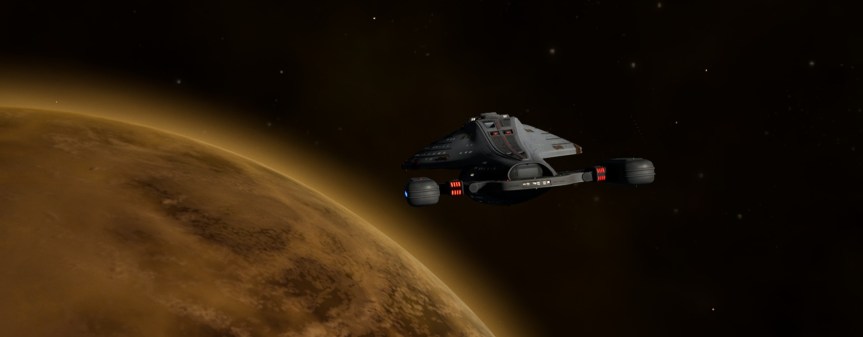
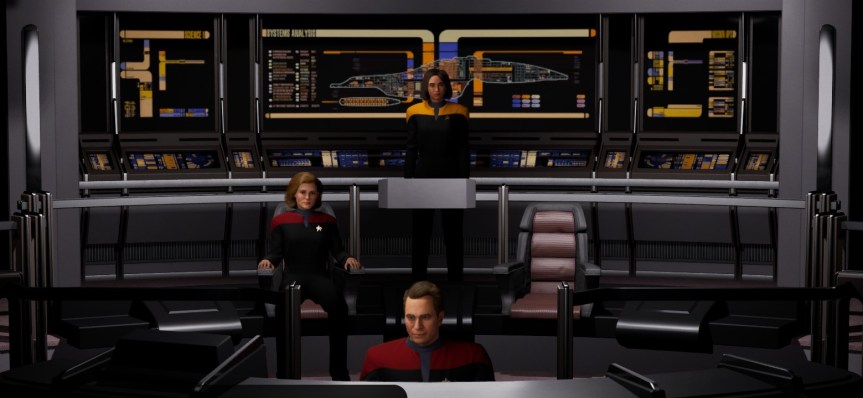
What is both a blessing and a curse is that the game is based on the Voyager TV show—quite literally at that, too, since it will be the storyline. The interesting aspect of this is that you are in control now, making decisions that might go the opposite of what happened in the show. However, this also means that we know what’s to come—feeling like a retread instead of setting out on your own Star Trek adventure, which would have been my preference.
While I did enjoy what was presented, my mind couldn’t help but think what this would be like if this were your ship, instead of Captain Janeway. Being a devil or an angel hovering over her shoulder is cool and all, but considering the nature of the sandbox gameplay, it does fall a little short of its true ambition with this kind of title (going by the demo, anyway).
Starship management
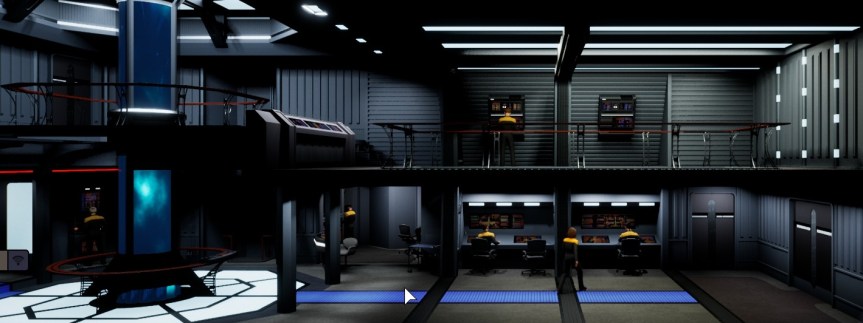
When it comes to gameplay, it’s a different story, since it’s the feature that truly grabbed me with this demo. It’s essentially a Voyager Starship management game, which best reminds me of the base construction in Xcom 2. Your base, in this case a Starship, is presented in a cutaway view for a clear overlook. Here, you have to decide what should be built, and what destroyed rooms need clearing.
Everything has a cost, and takes time, with building rooms being limited to how many engineering teams you have available. Each project costs an engineering team, and an engineering team consists of crew members, which are of a limited nature—as one would expect. It’s not as easy to just click and have stuff magically built or repaired, and on top of that, there is a resource cost as well. So, I hope your managerial skills are up to scratch, ensign!
It’s a juggle to maintain everything, and that’s not all. Each room requires power from your warp core to function properly—for that added management aspect to balance. Fun times ahead, and I mean that genuinely.
Away missions and exploration
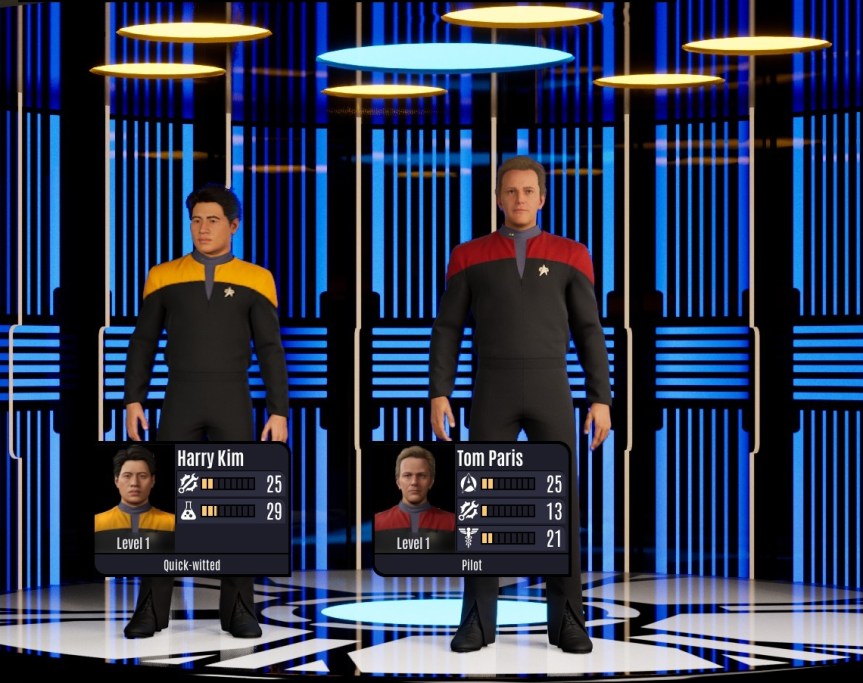
The away missions are visual novel-esque, with the gameplay consisting of selecting who to send on missions, and then making important decisions that determine the outcome after a story segment. A good idea here is to match heroes (like Tuvok and Chakotay) to what the mission entails, as their skills will be crucial for success. For example, Chakotay has good combat skills, which means he can roll on those skill tests, and depending on his skill, his chance of success increases. You can also combine the skills of your away team, if they share that skill between them.
Not too much direct gameplay here, but what is presented is engaging enough, thanks to the skill checks. These tests actually come with the risk of injury and even death, according to the tutorial. Imagine if Tuvok got turned into molecules in a transport accident early on in the adventure—that would be a big departure from the TV show!
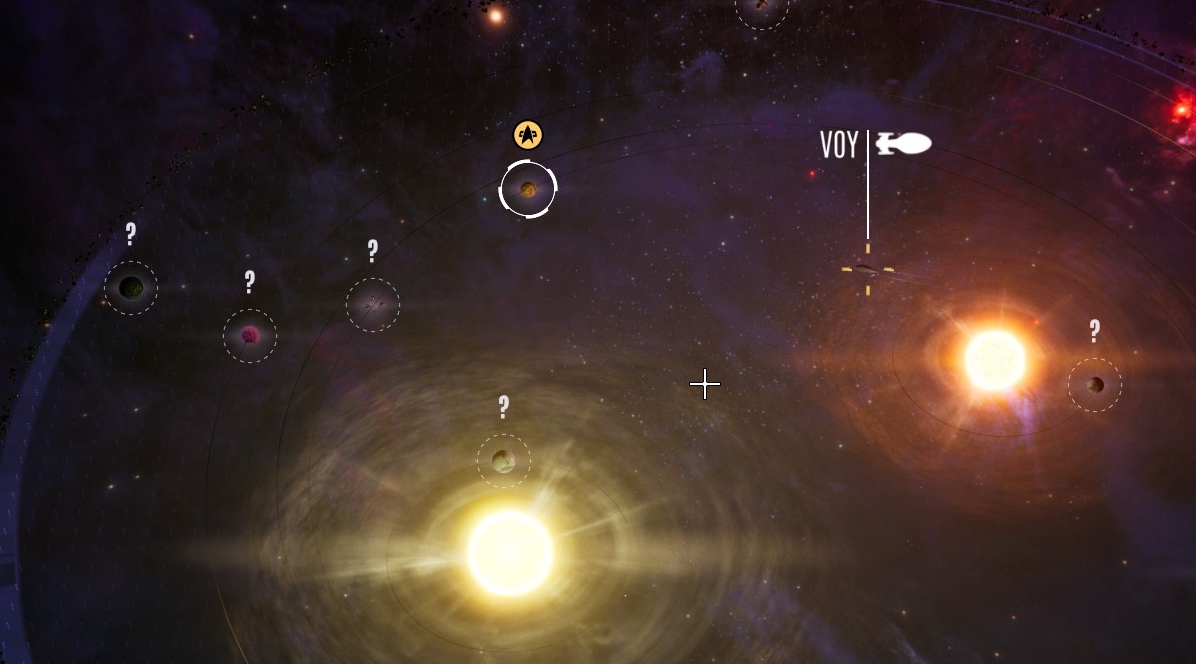
The exploration for the most part consists of you scanning planets for resources and the gathering of those. Just like when expanding the ship, you have to be really careful here—traveling around the Delta Quadrant is expensive in fuel. This also contributes to the appeal of the management to me, and I think all these aspects of the demo work really well together. It made me look for research and potential upgrades to the fuel storage, which led me to construct a room to store more fuel for further travel. This of course required energy and building-resources, and so it goes down the rabbit hole. It’s this interconnection between the systems that makes for an excellent management gameplay, and it seems Star Trek: Voyager – Across the Unknown got this aspect right (so far).
Lasers in space
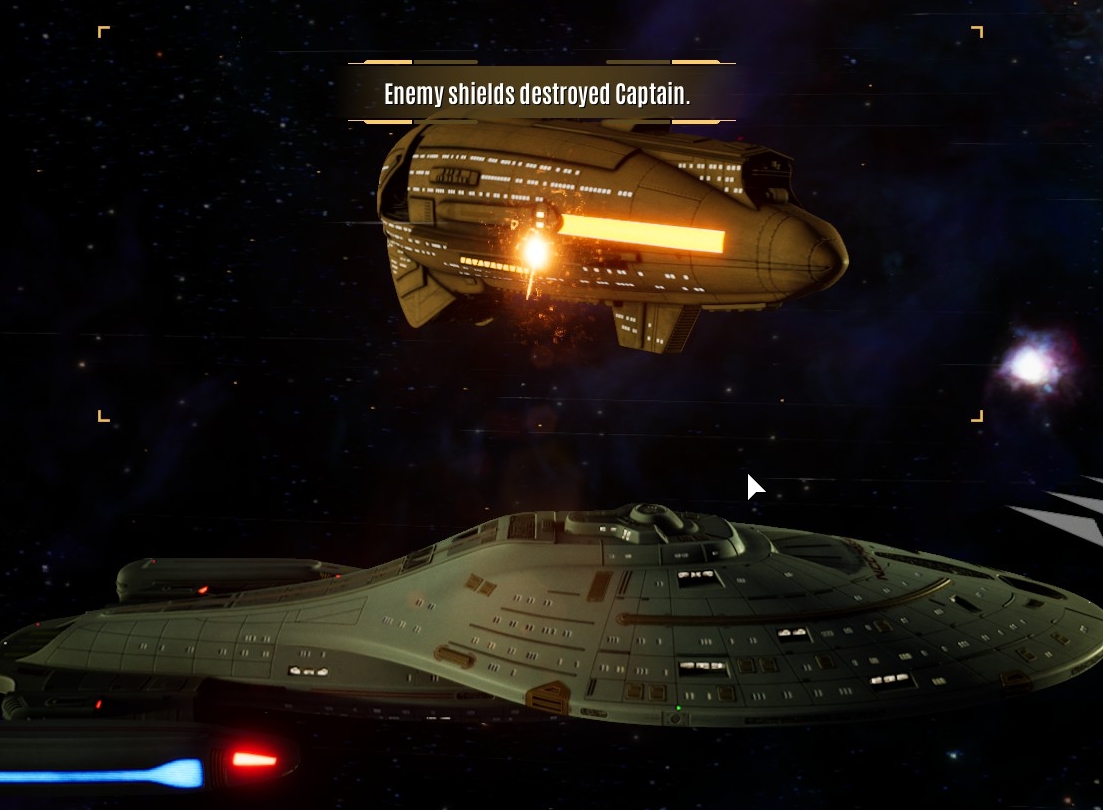
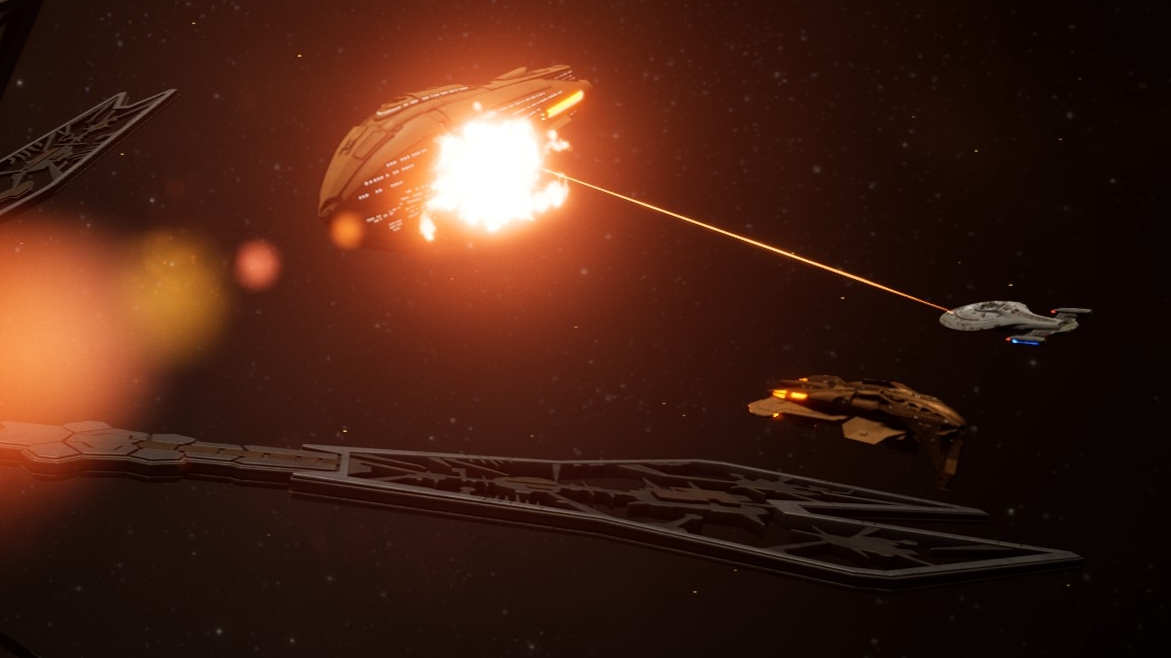
At last, we have the ship-to-ship combat. It’s real-time, with pause where you set attack priorities and quickly call out repairs before the warp-core explodes. You don’t control anything directly, like where and how to fly, but it’s probably the part that feels “gamey” in a traditional sense—instead of just clicking on menus and managing power fluctuations on the ship before the engineering crew goes nuts. It worked fine, and is a bit of a spectacle, seeing Voyager engaging her enemies depending on your recommended tactics. Cool points for that.
Visuals and sound
The presentation on the visual front is passable, and you can easily tell who is who from the TV show, even if some of them can look a bit funky. The demo has no voice acting, or any voices at all. I don’t know if it’s supposed to be like this in the main game, or if it’s just something that is not done yet, but I guess the future will tell. The thing that impressed me the most was the room-building mechanic from a visual standpoint, as it has that ant-farm pleasantness—to look at your crew from a distance, see them moving about, working hard to not let Voyager get crushed in the emptiness of space.
In conclusion, this demo surprised me with how deep and fun the management part was, as I thought it would lean into the visual novel style for everything. To be fair, even those segments were entertaining, in combination with the rest of the mechanics that flesh things out. The only thing that has me a little worried is the story, since we have already experienced it. While making different decisions in opposition to the show can be interesting, it feels more like a gimmick to me than a true narration with its own progression. Time will tell how it pans out, but it was the weakest part in the demo for me. I recommend giving the demo a go. It was surprisingly fun, and kept in tone with Star Trek!
Thanks for reading.
– Thomas
 Tom's Gaming Vault
Hi, Will you be doing a review of the full game as well?
LikeLiked by 1 person
Hi.
Unsure, considering the premise of the story. Otherwise, I will buy it in the future when it goes on sale. But a review wouldn’t be that current then 😛
LikeLike