


I have been playing the semi-forgotten party based D&D RPG Temple of Elemental Evil from 2003 with the mods Temple+ (engine fixes) and Circle of Eight (more engine fixes, + extra game content). The reason I mention the mods so early in the article, is that when I played Temple of Elemental Evil the first time, none of these mods existed. And Temple of Elemental Evil was not a stable game, at all, at release. However, it showed serious potential, which these excellent modders saw and started to work on. These mods are now, as I can see it: essential. Temple+ for the numerous fixes, and Circle of Eight for the additional quests, that makes the first part of the game much more enjoyable.
Flaws & fun
One of the more frustrating flaws of the game is how boring the beginning is in the vanilla game. Forcing you to do endless FedEx quests in Hommlet (the first village), to gain some XP – to finally be able to tackle the adventuring. One of the genius additions through Circle of Eight, is a whole new low level questline involving a crazed Lich, which makes the early game fun compared to what once was.
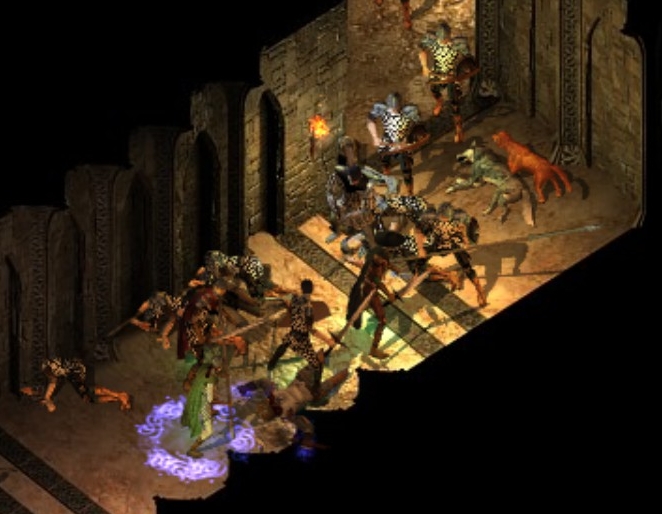
If we look past the flaws, and the extras in the form of mods, the game is pretty damn fantastic if you look how the engine works, and how well it inserts the 3.5 D&D ruleset into the game. Now, it’s not very free-form, not what I have noticed at least, meaning the non-combat parts of the game. But the actual engagements are absolutely stellar. And honestly, I had forgotten everything about it. There are so many things here that make the battles standout, even to the more modern takes on the genre, like Baldur’s Gate 3 and the Pathfinder games.
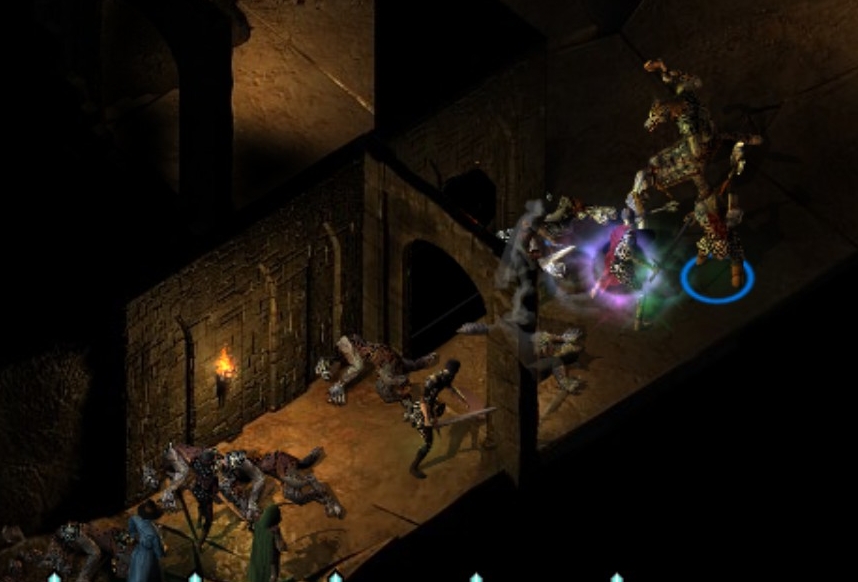
One of the first things I noticed is how important physical space is. If you are in a tight corridor, you will have a hell of time getting all your melee dudes to fit. Your warriors can’t get past each other, which makes positioning a most crucial point of any battle. I absolutely love this, even if I found it frustrating in the beginning. I couldn’t figure out why some of my men couldn’t squeeze by to score a quick gut-stab. So, making sure your tanks in full plate armor are in front are vital, and that’s not all. If needed, you also must plan for retreats – and that’s a whole other logistical nightmare. Making changes to a perfect setup can get pretty stressful, especially when your top warrior suddenly requires rescuing, bleeding from more than one hole! Yet, it’s fun, and very immersive. It also makes the combat incredibly tactical, as it works both ways. A good way to clear huge groups of monsters is to funnel them into murder-zones, with swordsmen in front, and longspears in the back that can reach over the frontline men.
Extra weapons
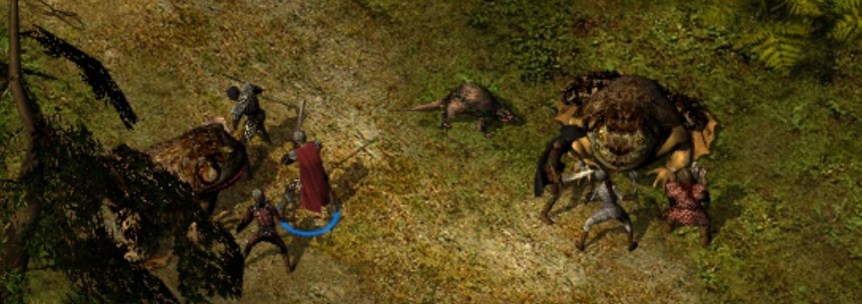
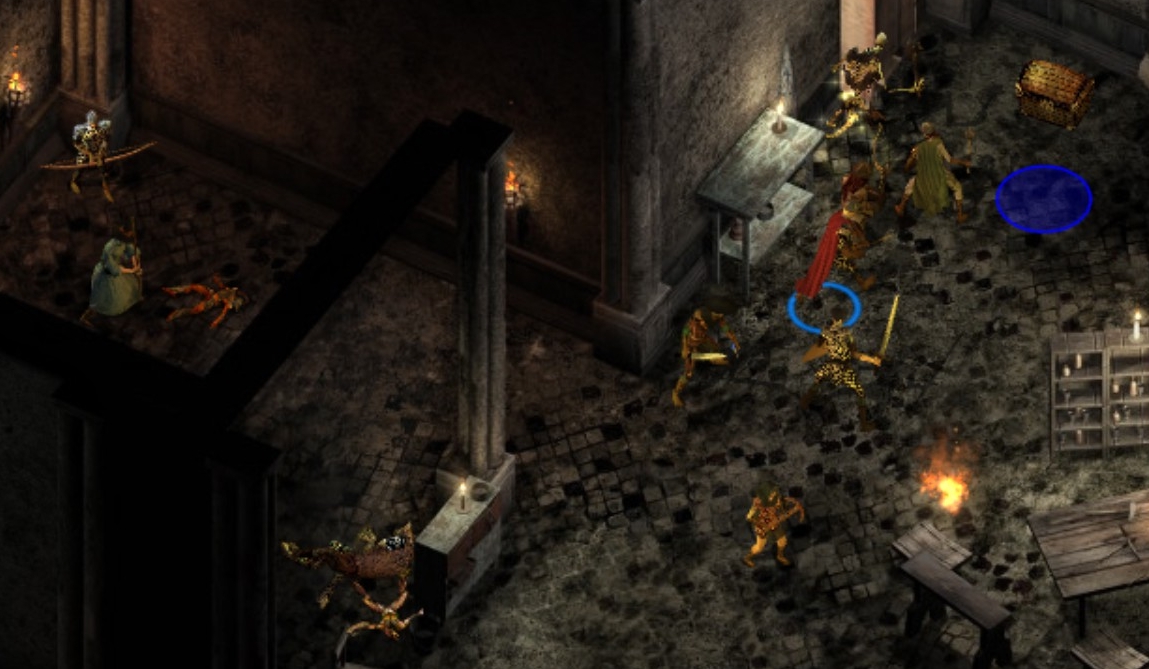
Since most fights quickly become a cluster of arms, legs, bodies, swords and crossbow bolts flying all over, it’s very important to keep your men stacked with weapons for any situation. This is not new in the world of turn-based RPGs, but thanks to how crucial positioning and physical spaces are, I feel it’s more critical than ever in Temple of Elemental Evil. Is there anything more wasteful than a turn without any action in D&D? To remedy this is to keep crossbows, bows and above all longspears on your combatants, at all times. When you can only fit two adventurers in a corridor, it becomes a natural bottleneck if all your men are equipped for close quarters combat. I like to imagine my frontline group getting pissed off at my rogue, because as it were, he could only stand there, picking his nails with the dagger, since he couldn’t fit nor reach the melee.
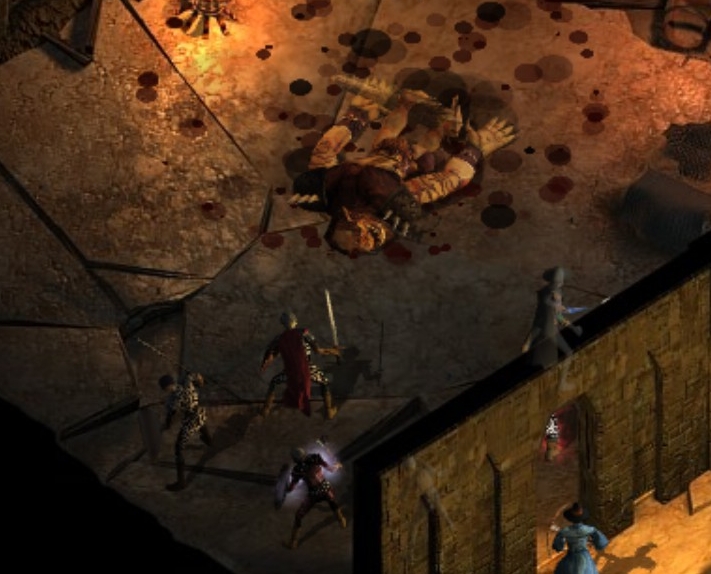
Now, I want to point out once again, that this is not something new. Yet, I can’t say, I have ever felt this handicapped in any top-down RPG before by having too many knights with one-handed maces, and too few rangers with spears & bows. This leads me to party composition. Being a classic D&D game, you get to create your own party of five men, but you are not limited to only these five while adventuring. During the game, you will be able to recruit three more, and while they gain XP and level up, they are more or less just hired help that comes with their own wants and needs. At least, according to the recruitment dialogue. I’m not sure if it’s fluff or not, but I guess we will see when the inevitable betrayal occurs. As you can see, the party can become fairly large. Which puts the need for space, and a balanced approach to party composition (including weapons) pretty high up on the list of pivotal things to consider.
This is another aspect of the Temple of Elemental Evil I dig: how big your party can get. It feels like you are commanding a small army, with pretty epic engagements that involve ten or more enemies out to cut your head off. Many modern RPGs come off as pathetic, comparable – like for example once again Baldur’s Gate 3, and Solasta: Crown of the Magister. It might be more personal having only four party-members, but it also puts a serious restriction on whom you want to bring along. With only four possibilities, would you really take a hybrid to test things out, or go for the more classic setup to be sure of success? I know I always fall into this trap, but with five or more, I usually go wild and try things out. Not everyone has to be here for combat only, which benefits the roleplaying.
3,5 rules
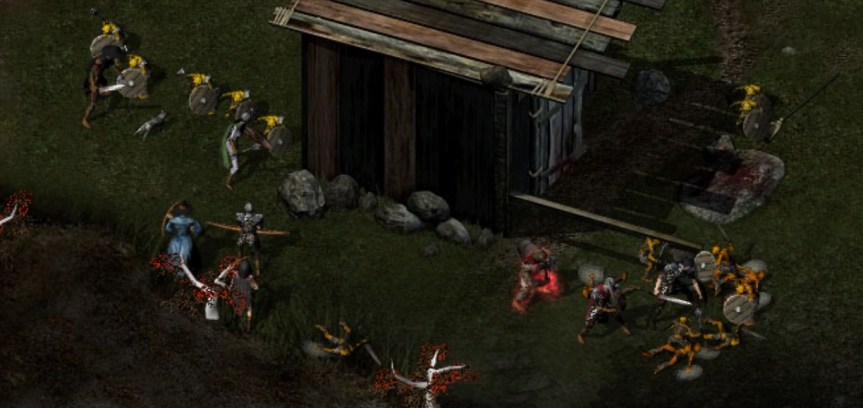
The D&D 3.5 rules have always been my favorite when it comes to PC gaming RPG adaptations. It’s so damn crunchy, with a lot of cool stuff you can do when in combat. What about disarming the orc about to chop your leg off? Or maybe trip him up, just to have your rogue stab him in the neck while he is struggling to get up. It’s very immersive, and the rules are solid, and from what I can tell so far, Temple of Elemental Evil does an excellent job of adapting it. It ties well into reach weapons, the importance of physical spaces and the denying of those – with a quick stomach jab. The ready-action system is another thing that is awesome – in how you can prepare for all kinds of actions coming your way. For example, preparing for approach, which works like the typical “overwatch”, but you decide what to do when it activates. There is a ton more to experiment with, that makes the combat great fun in Temple of Elemental Evil thanks to the rules, and it’s implementation.
This is not a true complete review, but I must give it a warm recommendation regardless, particularly if you are D&D RPG starved, or haven’t played Temple of Elemental Evil before. You can find the game cheap over at GOG! Just make sure to download the two superb mods that make the game to what it is nowadays. And when it comes to Circle of Eight, make sure to install the extra content version of the mod, for the additional quests! Good luck, warrior!
Thanks for reading.
Addendum
Looks like there was a re-release of the game with the mods included in one complete package. I have not tried it, but it should make things easier. You can get it here!
– Thomas
| System: | PC (GOG) |
| Played with: | Mouse & keyboard |
| Release year: | 2003 |
| Mods/fixes: | Temple+ Circle of Eight |
| Enjoyment rating: |  |
 Tom's Gaming Vault