

It’s time for the final game in the Assassin’s Creed Chronicles series. We are now in Russia, and we will get to stick our bayonet into both proto-commies and Brotherhood members. A welcome change, indeed. Unfortunately, Assassin’s Creed Chronicles: Russia is probably the worst of the lot, despite it having the coolest setting, and probably the best narrative. It starts out relatively well, but then it embraces all the painful mechanics of the other titles in the series, and turns it up to eleven.
The commies are coming
In Assassin’s Creed Chronicles: Russia you get to play as the older veteran assassin Nikolai Orelov, looking to retire after presumably 5000 kills to his name. However, before hanging up his rifle, there is one final mission that must be completed. Orelov has to retrieve the precursor box that has been eluding us throughout the series. Assassin’s Creed being based on historical events, with all this taking place during the Russian Revolution, it comes with complications. Orelov, being not completely heartless, witnesses the Tsar family being executed, with the daughter (Anastasia) of the family making a desperate escape. He decides to help her to flee the Templar’s, jeopardizing his mission of returning the box to the Brotherhood.
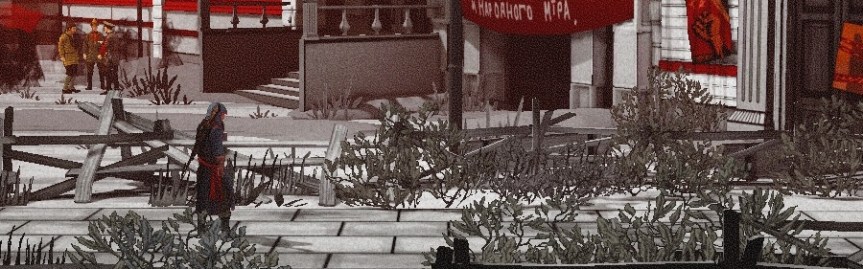
The rescue of Anastasia triggers something odd, which I find a little too magical to me. When the box interacts with Anastasia, her genes of past relatives activates, and apparently she is related to the protagonist of the first game (the China one). This means she has hidden assassin skills that are now under her control. It turns her into a new playable character (possessed), and from here on out, the game will switch between them during the escape from Russia.
The reason I found it a little too magical, even for an Assassin’s Creed title, is that this supernatural aspect is at the forefront for Anastasia when it comes to the gameplay. Now, the whole Chronicle series has had these special ability oddities, but in the case of Anastasia, it is taken to a new level that can’t easily be explained. For example, when she stabs a guy, she can use some of the Helix energy to dematerialize her victims, turning the poor sods into atoms to blow away in the wind. There is no logical way to explain this, it’s just weird as hell.
Who really are the good guys?
Otherwise, the story is probably the most involved, actually having some stakes. Orelov wants to retire, and flee with his family, and Anastasia must flee her past as a daughter to the now dead Tsar. What also makes the story somewhat more interesting, is that the Brotherhood at one point turn against Orelov, which means you will be fighting your own brothers on top of the Templar agents. It’s pretty cool, since my general dislike for the Brotherhood, and their methods (at least in the Chronicle series) is vindicated here. I also have to point out that the Brotherhood did nothing to stop the communist take-over. They are practically useless, and I constantly have to wonder where their allegiance and point of existence lies.
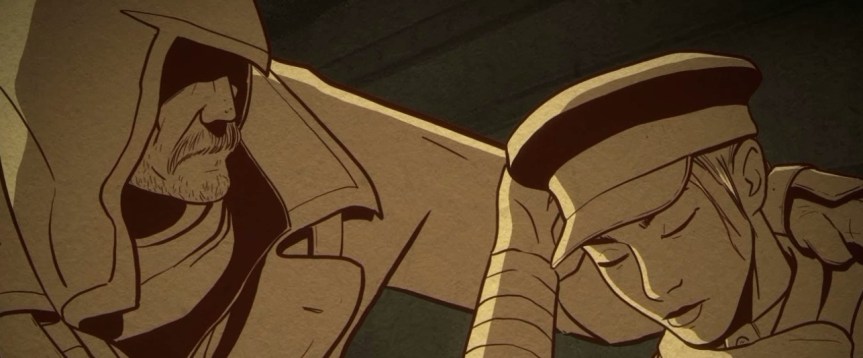
While the setup of the story is okay, the main problem with it is that it just ends. Sure, the characters get a conclusion, but what about the damn box? From what I can tell, there is nothing, it’s a literal mystery box and a MacGuffin (plot device) with no resolution. Very disappointing, considering this mysterious item has been a constant through all the games. Sucks to play all three games, just to get nothing on this. Insert Nelson laughing gif: “ha-ha”.
The age of rifles
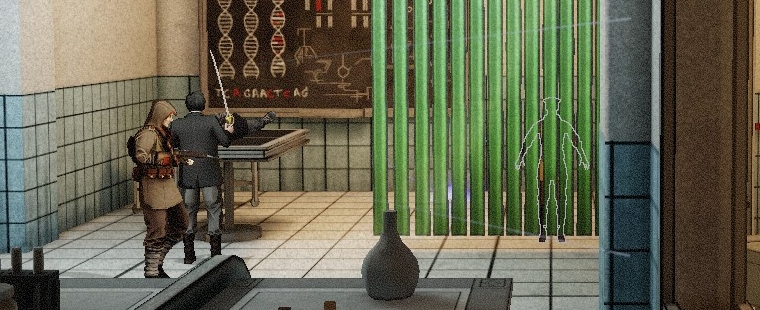
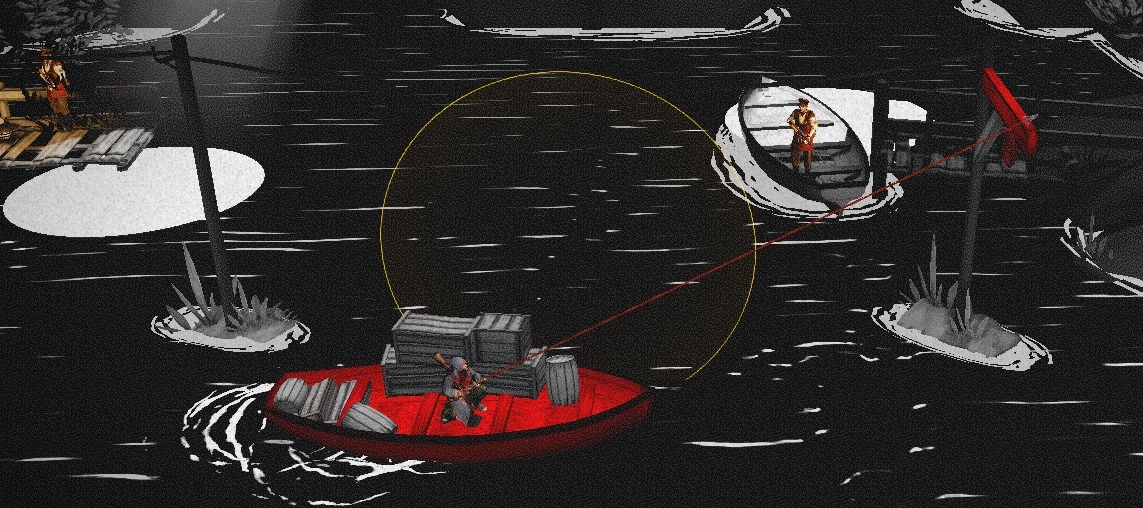
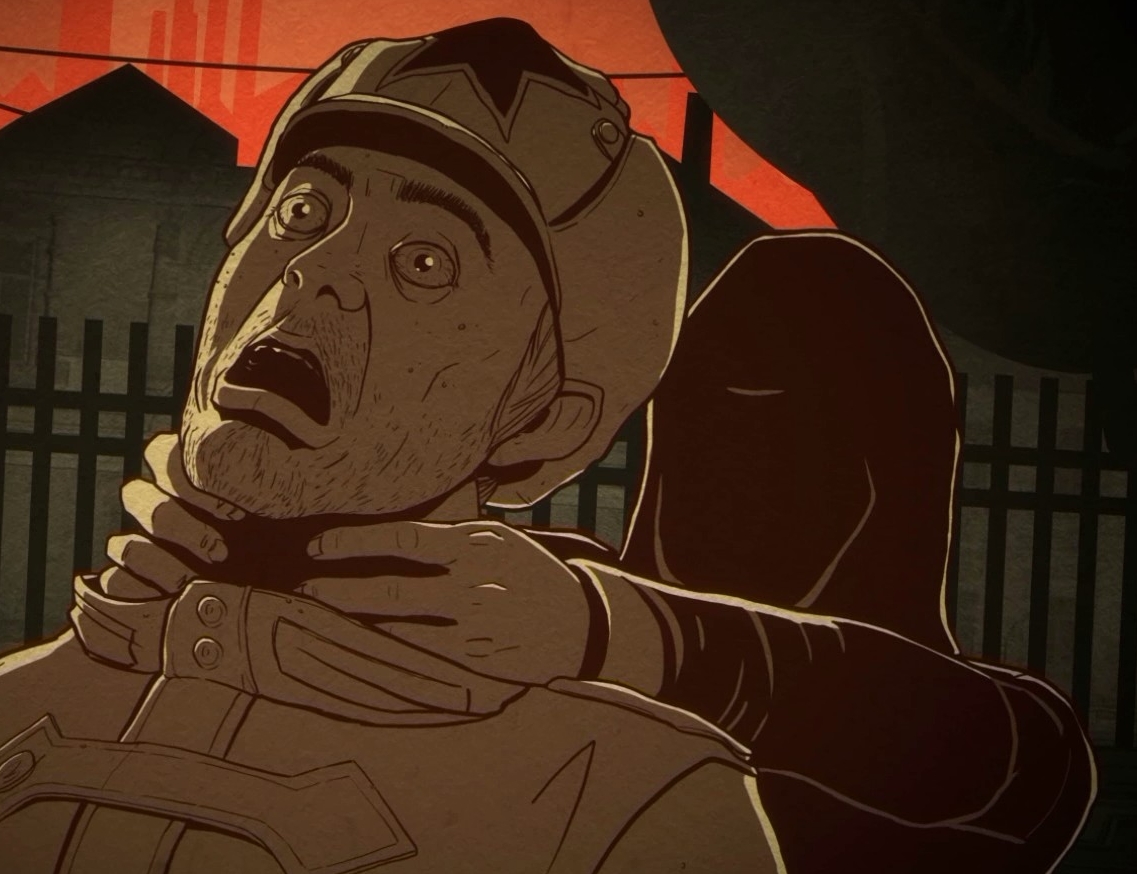
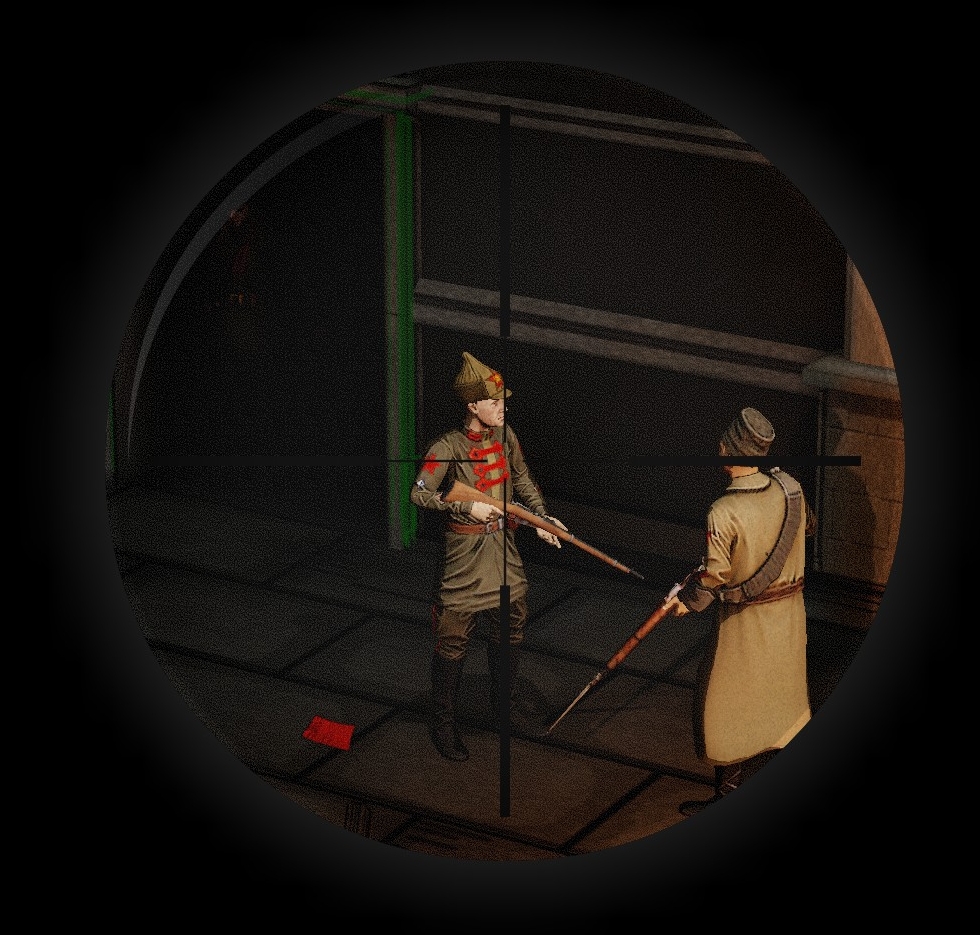
With Assassin’s Creed Chronicles: Russia being set in a more modern age, it comes with new weapons and equipment (now with electricity included). The rifle is a big part of this, both for you and the enemy, as most will be equipped with a firearm. Orelov’s favorite weapon being a silenced rifle with a bayonet attached, sure is a change to the formula. This means, popping dudes in the head across the map is a viable tactic, beyond the forced sniping segments. There are also new added diversions to use, and crawlspaces to assassinate from, which means the stealth aspect has gotten a few more toys.
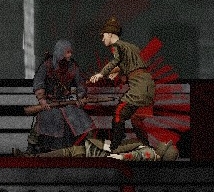
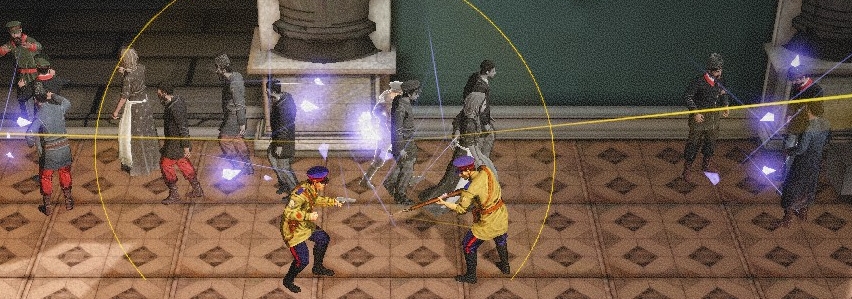
In the beginning, I easily thought this was going to be the best of the series. A cool setting, with enjoyable combat. But the trial and error eventually shows its face, and it’s the worst of the three. Some segments must be done in an exact way, or else you will fail. The timed events are extremely tight, with the limit of rewards set very high. Meaning, that once again, if you are a mere human, you will not be getting any, or very few upgrades. You can still finish the game, like I did, but it takes away a lot of fun from the experience. Any kind of random sandboxing moment, like having an improvised close combat encounter with a commie, will zap all reward points away faster than you can say “no fun allowed”.
The additions are interesting, and add some complexity to the sneaking. However, looking back on the games now, I think I preferred the more simplified approach to the gameplay systems that was in the first title. It might have been easier, and allowed for more screwups, but that’s the thing. It was fun, and held good pacing. Some areas feel like a real slog, as you need to figure out the exact way to progress, making Assassin’s Creed Chronicles: Russia play like a puzzle instead of an action game. To that, I say: yawn.
Stylistic
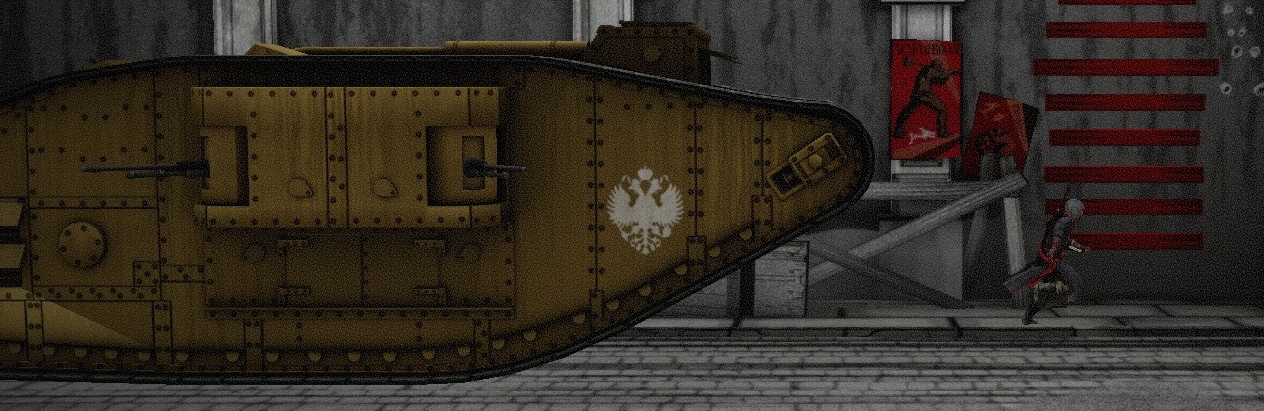
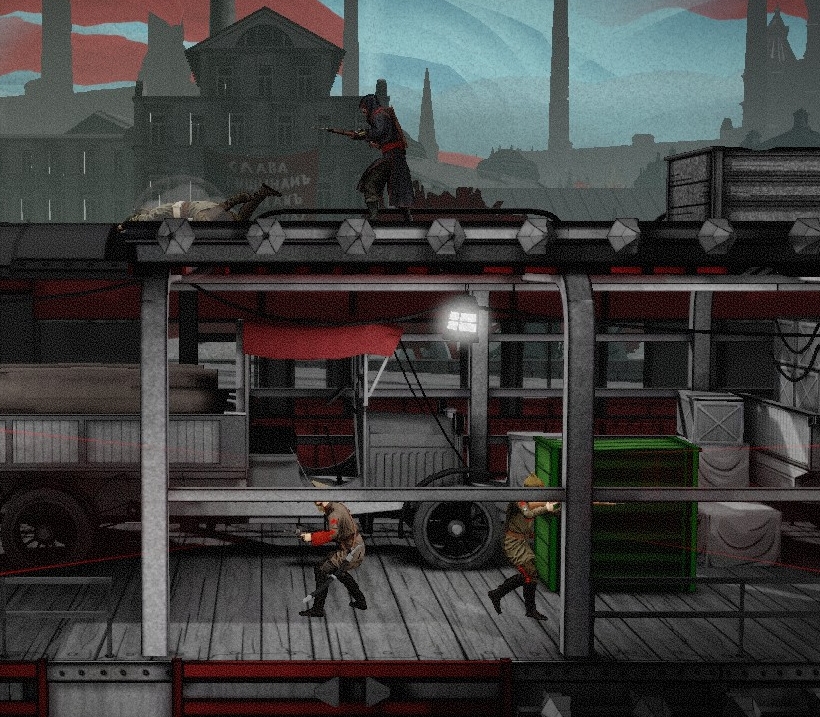
The style remains the same in a broad sense, except that the game is presented in a white and gray tone, to hammer home the chaos and despair of what is going on in the background. It looks great, with the red starkly standing out in the midst of all black and white. Very stylistic, that fits the setting like a glove. It reminds of the visual system of The Saboteur, which has a very similar style. In that game one of the few colors allowed is red, to show blood and the color of the Nazi flag. Only areas that you liberated gained color. It’s a bit on the nose, but the themes are the same, and works comparably. Well, except, that Assassin’s Creed Chronicles: Russia is only gray misery. Sounds, voice and music is also fine, and just like the previous games, it’s nothing that stands out, but works adequately for the setting.
Conclusion
I find the Assassin’s Creed Chronicle games a weird bunch. The games have interesting gameplay, for the most part, when it doesn’t cause an aneurysm due to frustration. Overall, the story, and the setting, means nothing at all in the end, with no real payout for your effort. It’s almost like it’s supposed to be a casual prequel to something bigger, perhaps a main game? From what I know, this is not the case. I’m not that into the franchise anymore, so I would have no idea if these events play into something larger at some point. The Chronicle games work as a casual 2D platformer, and at times, it impresses, but unfortunately, it never becomes anything more than that. Of the three games, I prefer Assassin’s Creed Chronicles: China. It might be the most simplistic, but looking back, those more simple gameplay mechanics allowed for the most fun, and felt less restricted.
Thanks for reading.
/Thomas
| System: | PC (Ubisoft Connect) |
| Played with: | PS4 controller with DS4 Windows |
| Release year: | 2016 |
| Mods/fixes: | None |
| Enjoyment rating: |  |


 Tom's Gaming Vault