
Soldier, strap on your boots and load your rifle. The commies are looking for a fight! And this time, it’s not the North Koreans. Operation Flashpoint: Dragon Rising is a really weird game. It’s a continuation of the classic Operation Flashpoint franchise, but now with Bohemia Interactive out of the picture. So, Codemasters decided to make their own version. The game has a slight schizophrenic feel to it, as it at times does feel like OPF of old. The engine used, and the scale and sandbox freedom is almost a carbon copy. In some places it’s improved upon, and works even better than Bohemia’s Arma series. For example, having units clearing buildings and shooting from windows. What makes it an oddity, is the console focus, and above all, the mission design.
Skira skirmish
The Chinese are not happy, as their economy crumbles after the effect of the 2008 economic crisis. This leads to the Chinese army occupying the Russian (fictional) island of Skira, as it has been shown to have vast oil reservoirs. With Russia and China facing each other down on the mainland, the Russians ask the US for help driving the Chinese off the island. And well, there we have it. It’s not the most enticing story, since we don’t get much beyond that. I also strongly doubt Russia would ever ask anyone from the West for help – much less the US. Regardless, it’s an okay, but boring setup for what’s to come. Having it being an island sets natural borders to the conflict/sandbox area.
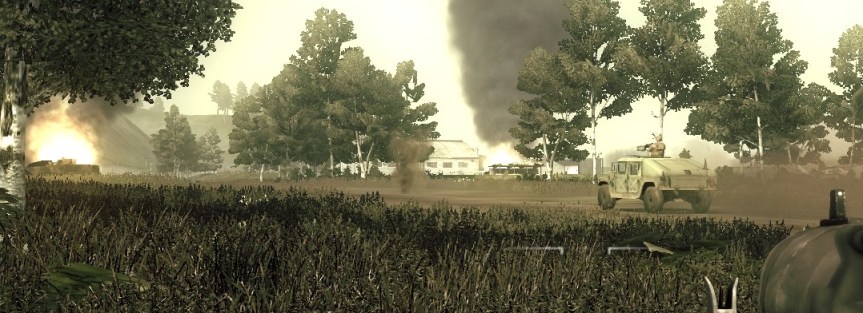
The somewhat drab setup would all be forgiven if the story was interesting. It’s militaristic in tone, which I like, considering the theme of the game. However, it’s incredibly basic. You just go from mission to mission, with very little drama accompanying the action. So, don’t go expecting any Tom Clancy-esque twists or anything. The whole campaign is a fairly linear affair, and despite what the setting implies, it’s very small scale, both in gameplay and story. It felt like a conflict that involved about a hundred men on each side, with a few tanks and helicopters as support. Now this wouldn’t be bad, if, as said, the story was intriguing, or not being painted as something big when it’s clearly not. Narrative wise, it gives you absolutely nothing, which makes the conflict feel lackluster, even if the gameplay is good at times. It never escalates or makes you feel like you are part of something greater. It’s a bunch of skirmishes that end after a few days, that as most will be a note in history.
When you see the flash, it’s already too late
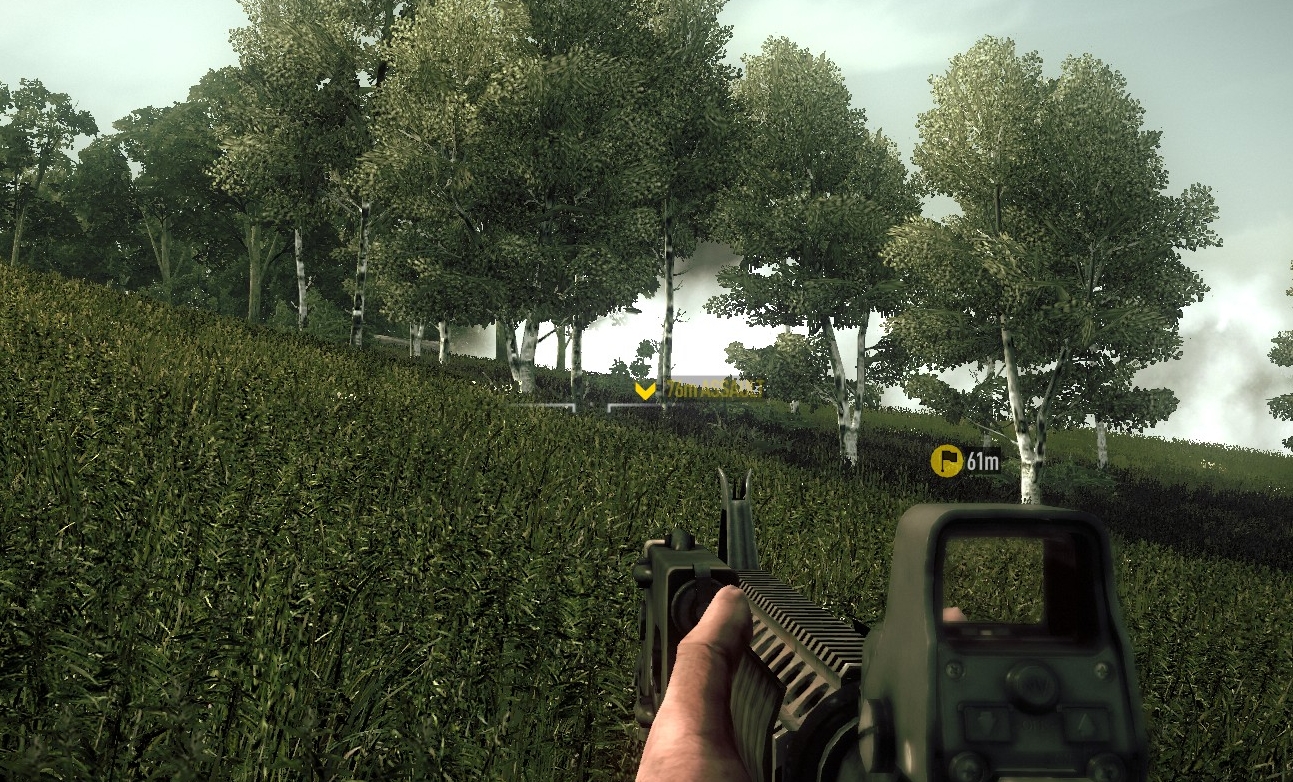
While the story is not the greatest, the gameplay is luckily better. The reason for this is how much it plays into feeling like classic OPF. It’s not just the look, it’s everything. It has the right amount of “clunky” to come off as an OPF/Arma-like. This means (beyond awkward simulator controls) that shots are deadly, it has a focus on team tactics, and the landscape consist of rolling hills with patches of forest. What Dragon Rising clearly improves upon, is the friendly AI, their survivability and usefulness. They can now clear houses, and don’t get stuck on absolutely everything. The friendly squad AI obeys orders, and does their duty, which means that you can now trust your men to actually do their job.

This is a huge improvement on at least the Arma AI, since they are for the most part useless, forcing you to endlessly babysit them. The AI only comes into play in Arma when you have them manning a stationary weapon. Then they suddenly become crack shots that can nail an enemy between the eyes two miles away. In Dragon Rising, the medic even comes to your aid when needed. Instead of having twenty minute long coffee breaks between the requests, until he finally decides to show up, like in Arma.
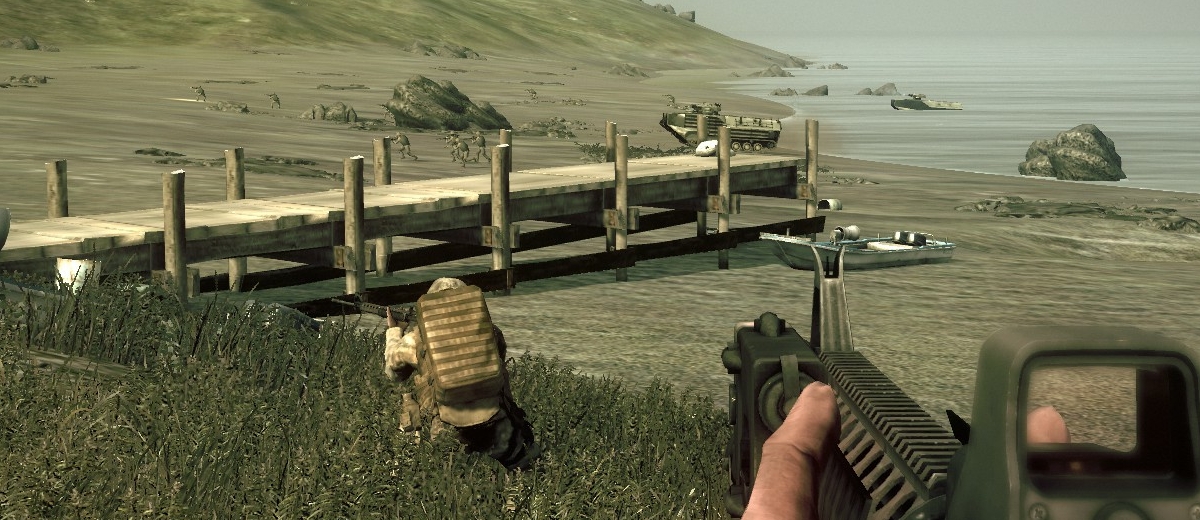
The enemy AI is fun to fight, too. They will scramble to cover before engaging you. They also drop to the ground when under fire, instead of standing in the open like idiots, waiting to catch bullets for their collection. Their willingness to fight can also be zapped, if you suppress them or kill too many of their squad mates. When getting demoralized, you can see them sprint away from the battlefield to stay alive. They also have medics that help out the wounded. If you don’t outright kill someone with a headshot, they will often fall to the ground screaming for help. All this adds a lot to the immersion, and greatly enhances the feel of the combat. Yet, it should be pointed out that all this comes with fewer functions, at least when it comes to the friendly AI. For example, they are entirely missing inventory. While AI and such has been improved, it has also been streamlined, probably to fit the more limited (Xbox 360, PS3) controller. This is a console port, after all.
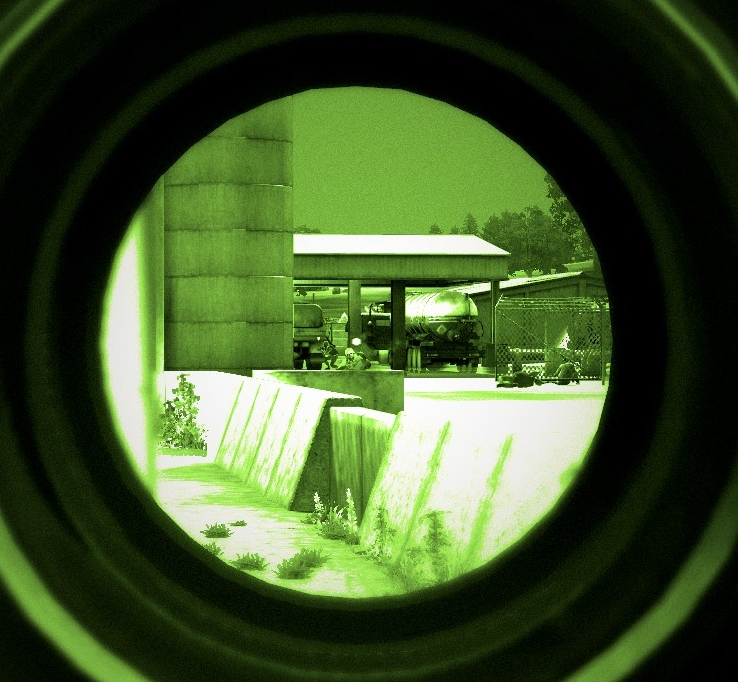
This leads into my next point. To get it to run on consoles, a lot of concessions have been made, and it shows. The fighting is at most a twenty-man skirmish, which does not convey the feeling of a war exactly. It’s a very small scale. It also makes me think the overabundance of spec-op missions is to limit the performance required. Because there are way too many of them. With only you and a small team, tasked to sneak around, and if spotted, having to gun down hordes of enemies coming at you in intervals. These missions feel like it undermines the premise of the game by making it a more solo action game than a war simulator involving many soldiers duking it out.

Scripting and mission design
While having so many spec-op missions is one issue, scripting and mission design is another. At times, when you go off script, and do something you shouldn’t do at that time, the game just grinds to a halt. It does not necessarily mean game over, but it means the AI will drop their brain out of their mouth and just stand there drooling, letting you to pick up the pieces. One example of this is the final mission. It’s supposed to be this big epic finale. However, in the final assault of the Chinese HQ, the friendly AI (beside my platoon) were nowhere to be seen. It felt very anti-climatic and lonely. And sadly, this is a feeling that lasts throughout the whole game, except for a few missions that do act like a battle.
The mission design also has some problems. More often than not, everything critical is left up to you. I have seen friendly AI, just sitting around doing nothing next to an enemy tank, while I had to scavenge for a rocket launcher among disappearing corpses. It just takes me out of the experience. And it’s all very hurried. Everything comes with a time-limit, which makes many missions have a rushed feeling, instead of letting you take the time to utilize the tactical options in the game. I would have loved to experiment more with the AI, let them flank and play a bigger role, but Command is constantly on your ass like a nagging wife – “You need to blow up that tank within ten minutes, or the war has to be called off”. It’s a shame, because when Dragon Rising let up for a bit, it’s a nice infantry simulator with fun sandbox elements.
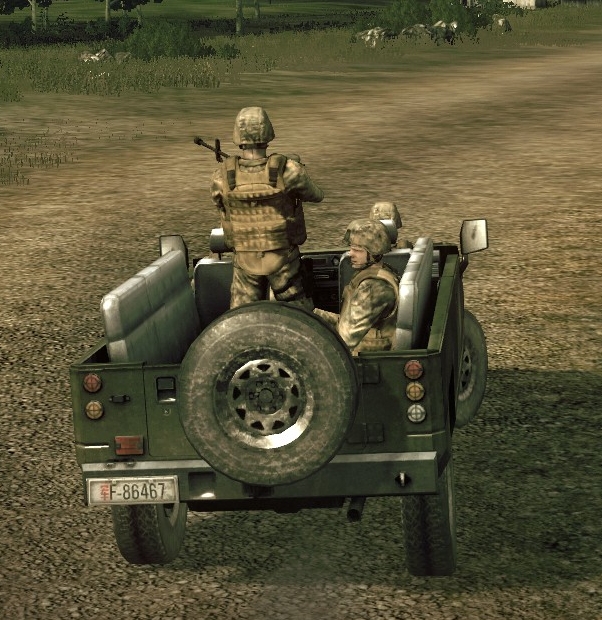
On that note, all missions are infantry based. I found this weird, since Dragon Rising has vehicles, and you can control some, but you need to steal them from friendly AI to do so. It’s an oddity, as I think a few tank missions, or maybe having a quick helicopter skirmish would do a lot for the game. It ends relatively quick, and unenthusiastic after twenty missions or so, feeling very undercooked thanks to this missing aspect.
Hills, forests and blood
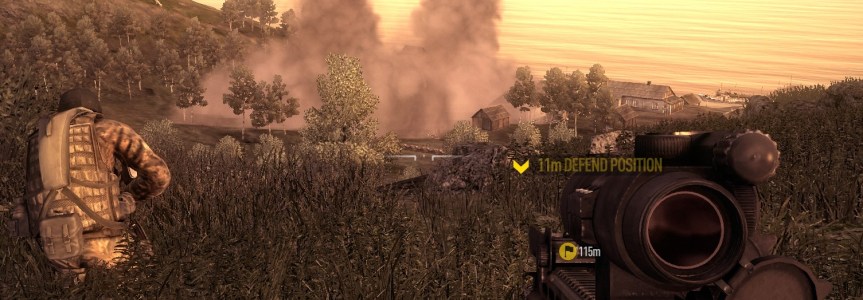
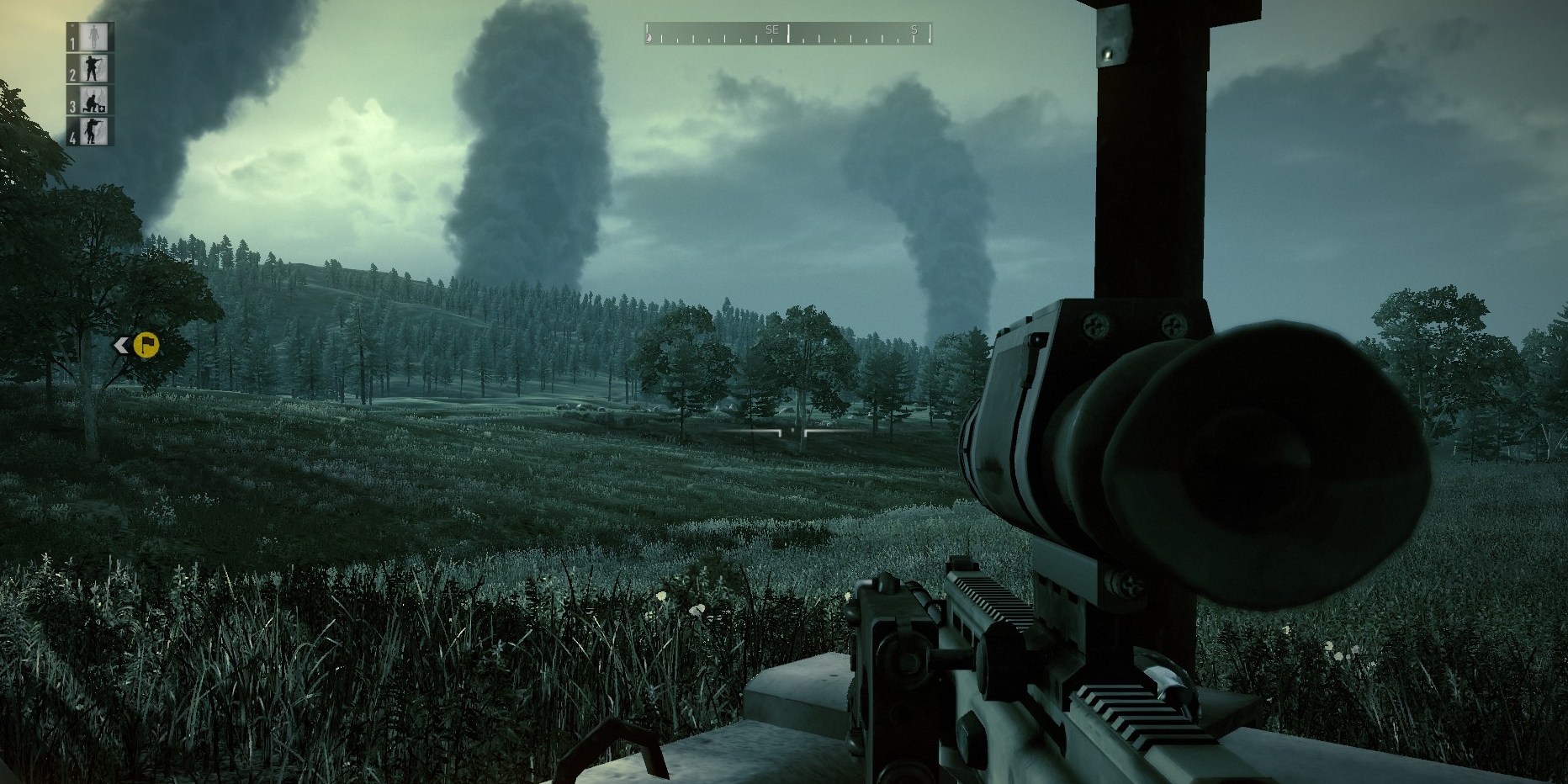
Operation Flashpoint: Dragon Rising is not too impressive looking, but it has a certain charm to its visuals. If we are to compare, I would say it lands on the same level as Arma 2, but a lot more stable in both performance and crashing. If you play without limiting the FPS to about sixty, the physics of the ragdolls become hilariously broken. A kill will send the enemy flopping around ten meters into the air. It looks funny, but it becomes rather silly rather fast if you want a realistic experience. Another issue is that the game auto reverts your chosen resolution to something low and unsuitable for your screen, if you don’t use a custom-made EXE file, which you can find here. It’s just an easy copy & paste fix.

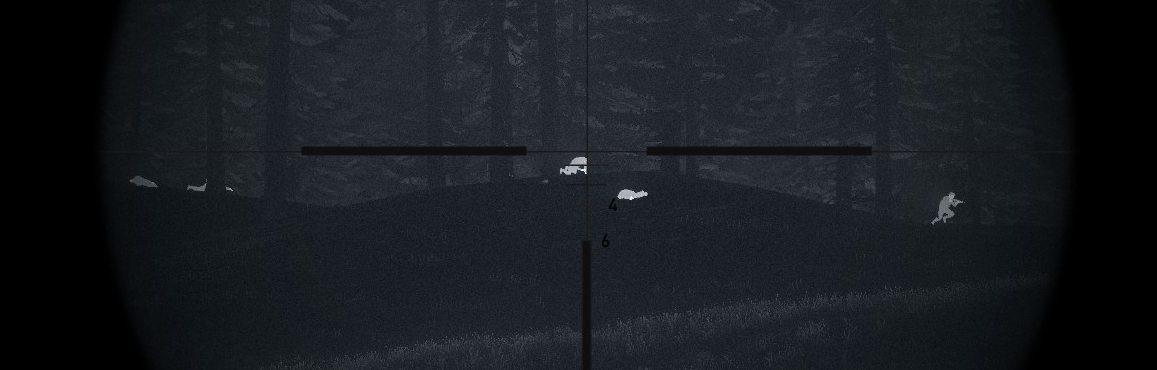
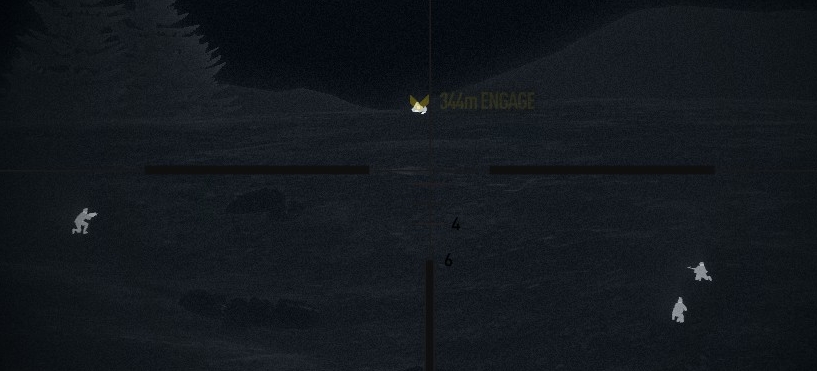
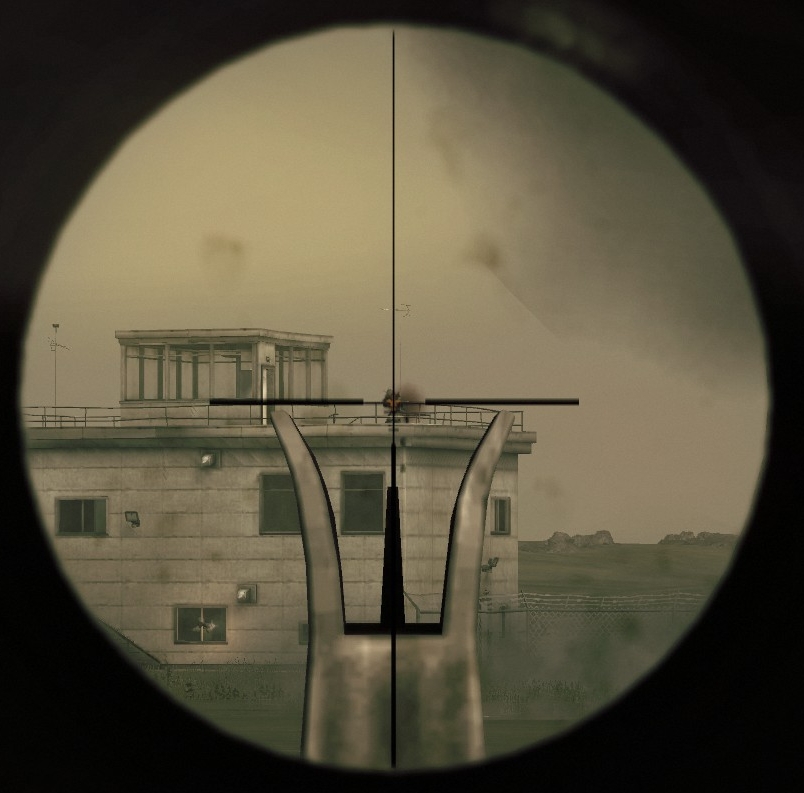
Another strange issue is that the game does not let you set your field of vision (fov). It’s very low. There is a way to change it, but you need to modify games files, and download stuff I would rather just not do. You get used to it after a while, though. Other than that, the visuals are adequate, and fits the franchise setting. Dragon Rising also lets you see very far, so if you enjoy long range sniping, this is the game for you.
The sound, and the little voice acting there is good, but the in between music was absolutely horrendous. It has some kind of Chinese/Mongolian theme to it, and I understand why it is there, but man, if it didn’t destroy my will to check the mission briefings hearing that screeching in the background. I highly recommend turning the music off!
Conclusion
I wouldn’t say Operation Flashpoint: Dragon Rising is a must-play in any way, since we already have Arma 2 & 3 and countless mods and custom campaigns for them. Even so, I enjoyed my time with Dragon Rising, despite the lack of a real story, and some missions feeling poor and rushed. It has that “we have Arma at home” stigma. Regardless, it’s on a nice engine that shows that AI can work well in a large scale game. It makes it hard to excuse Bohemia for their semi-broken AI for the Arma franchise, now going on Arma 4. The game is usually very cheap nowadays, so you probably can’t go too wrong, if you want some light OPF/Arma action in a new campaign setting. Whatever you do, don’t buy the sequel Operation Flashpoint: Red River. It’s on the same engine, but they tried to make it for a broader audience by making it more Call of Duty-like. It’s horrible, stay away!
Thanks for reading.
/Thomas
| System: | PC (Steam) |
| Played with: | Mouse & keyboard |
| Release year: | 2009 |
| Mods/fixes: | File & info to fix resolution |
| Enjoyment rating: |  |


 Tom's Gaming Vault