
Crysis: Legion is an adaptation of Crysis 2, which means it’s for the most part just a retelling of the plot line from the game. It’s not my favorite kind of gaming-related novel, since, well, you already know how it will play out and how it will finish. However, Crysis 2 is in a unique situation, as the lead in the game does not talk. Not exactly the best way to add characterization to the protagonist. Who even is Alcatraz? – might be asked a couple of times during the game. The story can also be hard to follow as little is explained, especially not how we went from the jungle fighting in first Crysis to now battling aliens and mercenaries in the heart of New York. Luckily, Crysis: Legion remedies this!
State of the world
In the game, you get a hum about the state of things, particularly if we zoom in on the setting – New York. If aliens invading wasn’t enough, there is now also a very unpleasant plague to contend with. The plague slowly turns humans into a mutated blob of infected flesh, with cancer growth all over the body. Awfully disgusting, yet, that is not all. It’s not designed to outright kill, there is something else to the plague. It makes the infected believe they are having a religious experience. Corralling them to a specific point in New York. As to why? Well, you have to read the book or play the game to find out.
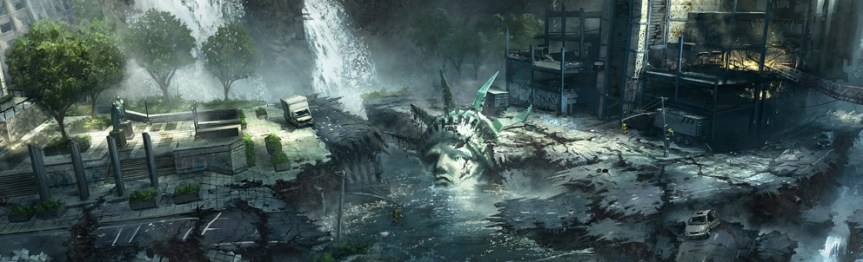
The plague is a thing that is addressed in-game, but what makes the book interesting is the things the game left out. After the events of Crysis, the world was flushed down the toilet. Beyond having unfriendly aliens buried deep down in the earth, the economics of the world were more or less destroyed. Where governments failed to maintain, private corporations rose – specifically one: Crynet Enforcement & Local Logistics (C.E.L.L.).
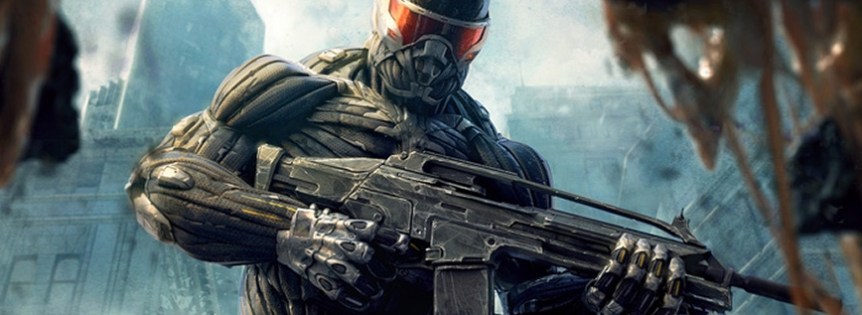
Large parts of the story provide a backdrop to the setting, and C.E.L.L is one of these things that gets explained in-depth. The problem with the game is that it feels very local and surface-level. Large segments feel “throwaway”. Like the aforementioned C.E.L.L mega-corporation. In-game they are just some random mercenary group that is your way, but there is much more to it than that since these guys operate on a dystopian power level – in many cases above the government. It adds a lot to the background lore and is pretty interesting to boot if you enjoy bleak futurism.
The book also goes into how the suit functions, its origins, and the alien tech that fuels it. There are so many tidbits like this that enhance the franchise, especially if your knowledge of Crysis only comes from the games. It’s also fascinating to realize how screwed up the world is. Many mercs working for C.E.L.L. have essentially been pressed into service for various reasons. A common theme seems to be poverty, a chance to earn some money. So, think about that next time you shank a guy and throw his corpse off a building for laughs. Trust me, I will still be doing it, but maybe it will give me a nanosecond of thought next time.
Alcatraz
In Crysis 2, the character of Alcatraz is extremely weak, to say the least. He is just a marine who by some incredible luck gets rescued from the brink of death and then put into the alien combat suit. While the hero of the past games, (Prophet), blasts his brains out with a pistol and leaves his mission for you to complete. It works reasonably well in-game, but it doesn’t leave much to work with when it comes to establishing who Alcatraz is. An issue with this, as I mentioned before, is that he does not speak in-game. While the same remains for the novel, you at least get to follow his thoughts about everything that happens to him and what the suit does for him.
Some of it goes into existential stuff because while the suit keeps you alive, it’s more of a brain-in-a-jar type of thing, than making sure you are intact once you are outside the suit. You see, Alcatraz was as good as dead when Prophet found him, suffering from serious wounds that no man recovers from – by normal means. The suit is however far from normal. While it does keep Alcatraz alive, he is basically in a suspended mode between life and death. His mind and brain are fine, but his body is far beyond what you can come back from. And it only gets worse since the suit consumes non-essential parts of his flesh to repair other more critical areas of the body. There’s a major body-horror element to Crysis that you don’t realize is there unless you read the novel. As you can guess, this, beyond all other weird things that happen to Alcatraz, puts him into a depressive and nihilistic state of mind. It’s good entertaining stuff.
There is also a conflict between the “spirit” of Prophet, and Alcatraz, since fragments of his psyche remain in the suit. It’s not entirely explained, except telling us that it’s unknown alien tech, so god knows how all this works (not in those words though). Honestly, it’s fine since it doesn’t go beyond that, even if it becomes a major plot point in the future game. I find it pretty cool because it adds another conflict the lead has to navigate through.
Conclusion
Other than that, the story follows the same narrative beats as the game. It’s just expanded in every way, so if you want to know more about the setting, it’s an excellent read for that alone. I very much enjoyed reading it, even if I knew the story already. The only thing that I found lacking is the action scenes, since they are for the most part only mentioned in passing. Skipped for what the author considered more important – like the characterization of the cast and the background story. That is all fine, but I would have liked to read about some fun skirmishes in detail, seeing what the book it’s based on. Besides that, it’s a fun sci-fi invasion romp, and what makes it an extra fun read is what it leads to. You might think I will say Crysis 3, but it’s actually the book Crysis: Escalation that bridges the two games. It’s excellent, so expect a review soon!
Thanks for reading.
/Thomas
 Tom's Gaming Vault